


:format(webp)/vulcan.abetter.bid%2Fwp-content%2Fuploads%2F2025%2F03%2Fpexels-chase-fraser-458882-1157417.jpg)
 FAQ
FAQ 
:format(webp)/vulcan.abetter.bid%2Fwp-content%2Fuploads%2F2025%2F01%2Fchad-stembridge-1Je0QPQbCUM-unsplash.jpg)
Auto Auction Blog
January 27, 2025
What Is a Biohazard Car? Risks, Cleaning, and Buying Tips
:format(webp)/vulcan.abetter.bid%2Fwp-content%2Fuploads%2F2022%2F10%2F2022-10-05-11.30.40-150x150.jpg)


Customer Service
9 am - 6 pm EDT
Monday - Friday
International
+1 (302) 613 - 1026Toll-Free
+1 (888) 277 - 3182For ordinary drivers, it’s sometimes challenging to distinguish between sports cars. For instance, a Corvette clearly fits the category. However, vehicles like the Ford Mustang straddle multiple classifications (they are often labeled as pony cars). These differences determine specific categories. Use the following information as a guide when planning to buy the corresponding vehicle or using a VIN decoder to verify a car’s credentials.
A sports car is a vehicle engineered primarily for dynamic productivity—emphasizing handling, top speed, and driver engagement—typically with two doors and a low-slung profile, distinguishing it from a supercar.
These cars stand apart from ordinary vehicles. There are several distinctive characteristics:
What constitutes a sports car varies in the world. European sports car manufacturers like Porsche emphasize driving finesse, while American interpretations often include stronger engines and straight-line speed. Japanese sports cars balance productivity with reliability. This regional diversity has shaped modern cars into distinct categories with notable similarities.
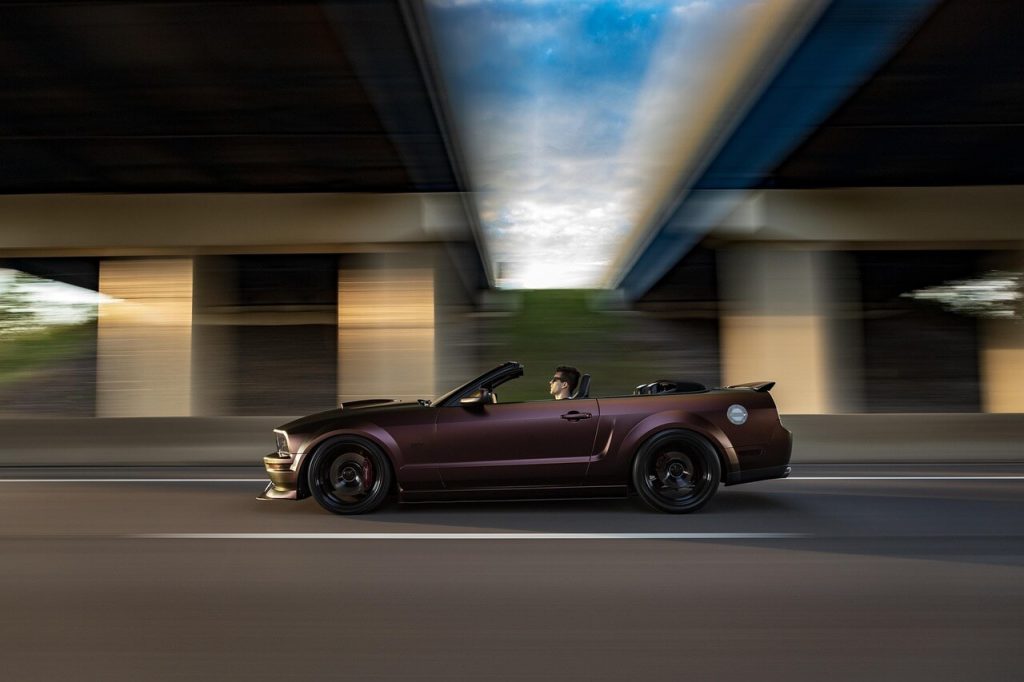
A muscle car is usually a sedan or coupe produced in the U.S. These vehicles have a large-displacement V8 engine. High raw power and straight-line acceleration are originally designed for affordable productivity on highways and drag racing. Therefore, they are a typical choice for high-speed enthusiasts.
Muscle cars have specific characteristics distinctly different from their sports car counterparts:
Owning a muscle car versus a sports car affects your daily experience. Muscle cars generally offer more practicality with larger interiors and better visibility. They’re often more comfortable for highway cruising while maintaining that visceral connection to raw power. Sports cars deliver a more immersive driving experience. However, they usually require higher maintenance costs. The best luxury cars often combine sports car elements with refinement. This combination is perfect for both street driving and occasional track days.

The aftermarket support for muscle and sports cars creates vastly different customization paths, influencing which might better suit your ownership goals.
Understanding the practical ownership differences between these performance cars helps in making a more informed decision about which category better fits your lifestyle and budget.
| Factor | Muscle Cars | Sports Cars |
| Insurance Cost | Moderate to high | High to very high |
| Safety Features | Varies by model year; modern muscle cars are often equipped with good safety tech | Advanced in newer models; limited in classic models |
| Theft Risk | High, especially for iconic models | Varies by brand; exotic models have a higher risk |
| Crash Test Ratings | Generally improving in modern models | Mixed; some prioritize productivity over safety |
| Child Seat Compatibility | Often possible in rear seats, making them more suitable for a family with a kid | Limited or impossible in two-seaters |
| Visibility | Generally better due to larger greenhouse | Often compromised by low rooflines |
Depreciation curves for sports cars and muscle cars are distinctive. Limited-production sports cars, for instance, from Porsche, often maintain value better. Mass-produced models, in turn, depreciate quickly. Muscle cars with historical significance have seen appreciation in recent decades. Modern muscle cars with V8 engines have a good chance of holding value better than their V6 counterparts. A car with a clean title always commands premium prices regardless of category.
The ecological footprint differs significantly between traditional vehicles and their evolving modern counterparts.

Vehicles like the Dodge Challenger Hellcat deliver muscle car raw power with sophisticated suspension systems typically found in sports cars. Similarly, the Corvette combines American muscle with world-class handling. Though purists might disagree, modern engineering allows crossover models that satisfy both definitions. The American pony car segment, including the Mustang, often bridges this gap.
The electrification revolution is transforming both vehicle categories, creating intense competition among manufacturers.
Future muscle cars:
Future sports vehicles:
The distinctions between sports cars and muscle cars represent different automotive philosophies. Sports cars emphasize the holistic driving experience through corners and straight sections alike. Muscle cars celebrate the visceral thrill of acceleration. Electrification is planned to reshape the market. As a result, these differences may evolve but won’t disappear.
Grasping these distinctions provides an opportunity to find the vehicle that matches your needs. Consider using tools like a VIN decoder, which will assist in ensuring you’re purchasing exactly what you expect.
In contemporary sports cars, horsepower is within the range of 300-500. A lighter model (about 3,200 pounds) has higher performance than a heavier one. Early sports cars proved that balanced handling can be important.
Sport mode transforms a vehicle’s behavior by adjusting multiple systems to prioritize productivity.
Sports cars’ engine mapping changes for more aggressive throttle response.
Transmission shifts at higher RPMs and downshifts more readily.
Steering becomes heavier with reduced power assistance.
Suspension stiffens on vehicles equipped with adaptive dampers.
Stability control thresholds increase for more driver control.
Exhaust valves open for enhanced sound on active exhaust systems.
Among the most beginner-friendly muscle cars, the Dodge Challenger should be highlighted. Many car enthusiasts mention this vehicle’s compliant ride and predictable handling. Modern examples come equipped with driver aids that help manage power. The Ford Mustang with the EcoBoost engine offers muscle car styling with more manageable productivity.
As a rule, sports cars have only two doors. However, modern interpretations have expanded beyond this constraint.
The classic definition emphasized two-door coupes or convertibles.
“Four-door sports cars” like the Porsche Panamera challenge conventional models.
The essential sports car experience focuses on driving dynamics, not door count.
Many purists still maintain that true sports cars must have two doors.
Muscle cars with special engines or performance packages often become collectible, sometimes appreciated substantially. Standard muscle cars generally depreciate faster than popular SUVs initially. However, well-maintained muscle cars usually reach a value plateau and then begin appreciating after 15-20 years, while most SUVs continue depreciating.
:format(webp)/vulcan.abetter.bid%2Fwp-content%2Fuploads%2F2025%2F02%2Fscott-rodgerson-ffH_GkINfyY-unsplash.jpg)
:format(webp)/vulcan.abetter.bid%2Fwp-content%2Fuploads%2F2024%2F03%2Faustin-lowman-SpSVyLVB_5g-unsplash.jpg)
:format(webp)/vulcan.abetter.bid%2Fwp-content%2Fuploads%2F2026%2F09%2Fev.jpg)
:format(webp)/vulcan.abetter.bid%2Fwp-content%2Fuploads%2F2026%2F09%2Fflipping.jpg)
:format(webp)/vulcan.abetter.bid%2Fwp-content%2Fuploads%2F2026%2F09%2Fcopart.jpg)

