


:format(webp)/vulcan.abetter.bid%2Fwp-content%2Fuploads%2F2026%2F03%2F1cover17.jpg)
 FAQ
FAQ 
Auto Auction Blog
March 23, 2023
How to Buy Cars at Auction: Buying Guide & Tips
:format(webp)/vulcan.abetter.bid%2Fwp-content%2Fuploads%2F2022%2F10%2F2022-10-05-11.30.40-150x150.jpg)


Customer Service
9 am - 6 pm EDT
Monday - Friday
International
+1 (302) 613 - 1026Toll-Free
+1 (888) 277 - 3182Buying a car at an auction in another state is legal and often cheaper, but only if you verify the vehicle title, check the VIN and vehicle history report, calculate the total cost including auction fees and transport, and complete the title transfer and registration in your home state. Most costly mistakes happen when buyers skip these checks before bidding.
Yes. You can buy a car in another state through an auction, a dealership, or a private party. The sale is legal, but paperwork is where costly mistakes usually happen.
Buying out of state requires more planning because title, taxes, transport, and registration rules may differ. If you live in a state with high car prices, there is no single best state to buy a car in. However, a neighboring state may help you find a better deal. The goal is to buy the right car and register it legally in your home state, following official requirements such as titling and registration deadlines outlined by state authorities.
Before you start buying a vehicle away from home, remember this:

Choose the option with the lower full cost and lower stress. A remote auction can beat local pricing, but only when the car auction history, title record, and delivery plan look stronger than a nearby retail choice.
An auction gives more inventory. A local car dealership gives easier inspection, financing, and support. It is also easier to compare a new vehicle or a used car when you can inspect a car at a dealership. For anyone buying out of state, use the table below:
| Factor | Auction Purchase | Local Dealer Purchase | What It Means for the Buyer |
| Price | Low bid, then fees get added. | Higher ask, fewer surprise add-ons. | Cheap listings can turn expensive. |
| Inspection ability | Mostly photos and reports. | Easier walk-around and test-drive. | Remote risk is higher. |
| Warranty | Usually as-is. | A limited warranty may be available. | Repairs often fall on you at auction. |
| Payment timing | Fast wire or cash deadline. | Store financing is common. | Funds must be ready early. |
| Title clarity | Clean, salvage, rebuilt, or delayed titles appear. | Retail stock is checked first. | Title review matters. |
| Paperwork | Buyer handles more steps. | The dealer may handle forms and tags. | Convenience can justify a higher price. |
You may buy in one place and title in another. Emissions rules, tax treatment, and damage disclosures can differ by jurisdiction. Therefore, an out-of-state car can still create delays. Registration is handled where you live, not where the sale happened.
For example, California requires strict emissions compliance, so a vehicle purchased in a state without emissions testing may still need to pass a smog check before registration. The title must be properly transferred with the required forms and fees according to official DMV California title transfer requirements. In Texas, title transfers are generally straightforward, but you must pay state sales tax when registering the vehicle locally. New York may require additional inspections for salvage or rebuilt titles before issuing plates.
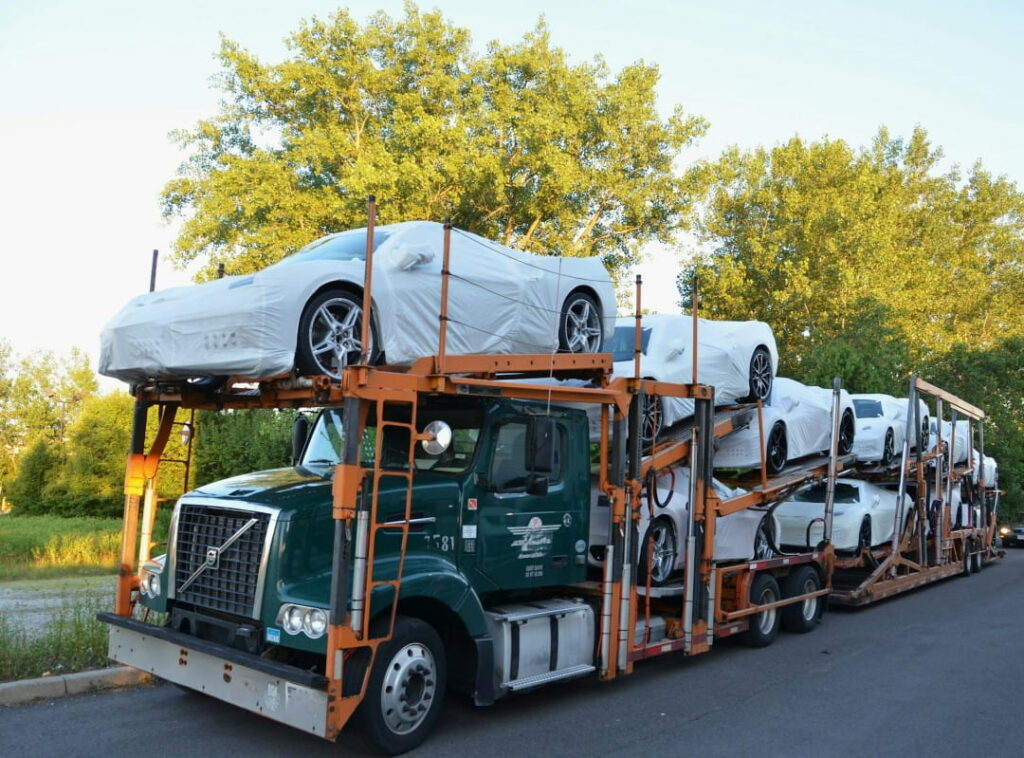
The title is the key ownership document. After you purchase the car, you need that record moved into your home state so you can register the vehicle. Check the process before you buy a car without a dealer license. Tax handling can also change when the vehicle comes from a dealer.
To keep the transfer clean, follow this order:
Remote bidding works only when you build your own file first. Start with the condition report, service notes, and the vehicle identification number. Match that data to a history report and a recall search. Consider using a reliable VIN decoder and reviewing title and brand records.
Buying across state lines? Use this checklist before you bid and buy the car:
Auction photos can be accurate and still incomplete. Trouble often sits underneath, behind trim, or inside short notes. That is how car buyers miss hidden mechanical damage. Slow down and look for patterns, not one dramatic flaw.
Pay attention to these signs:
A history report is not perfect. However, it is one of the best tools before you buy a car at auction. Read it like a timeline. That helps you spot cases where the listing does not match the vehicle’s history.
Focus on these checks:
Order an outside inspection when photos are weak, the report is thin, or the price is high enough that one surprise kills the savings. It is especially smart when purchasing a used vehicle across state lines. A third-party inspector can verify structural integrity, check for frame damage, test key mechanical systems, and confirm whether the condition matches the listing. This is critical when the vehicle has limited documentation, unclear damage notes, or inconsistent history records.
The winning bid is never the true total. If you buy a car out of state, fees, shipping, repairs, taxes, and registration still follow. Treat every car purchase as landed-cost math. This is where small mistakes become expensive. That rule applies to any car you plan to buy. Compare the final number with similar vehicles in your home state before you send money.
Use this flow:
Once payment clears, you either plan to drive or arrange delivery. Open carriers cost less. Enclosed carriers protect better. Release timing depends on auction yard rules and carrier availability.
Do not take possession of the car without tags, insurance, and a quick safety check. If that feels risky, ship it back to your home area. Inspect it on arrival.
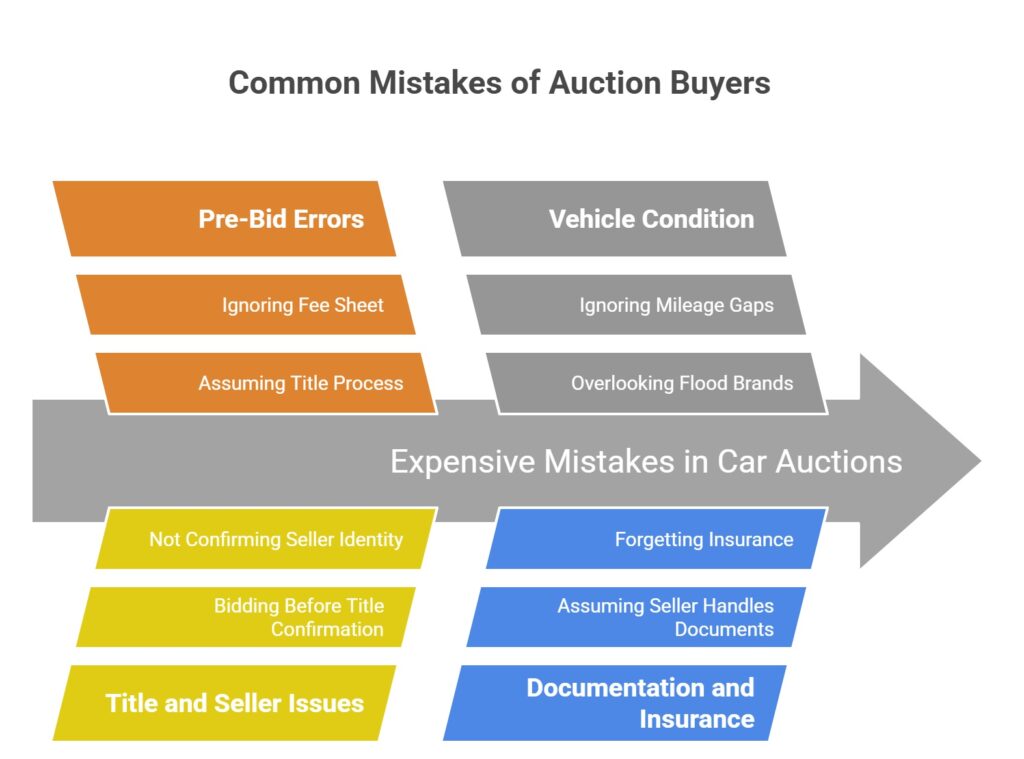
Most expensive mistakes are made before the first bid. Buyers focus on the hammer price, ignore the fee sheet, or assume the title process will match the seller’s location.
Whether you buy from a private party, a broker, or a store, avoid these mistakes:
Buying a car out of state through an auction is legal, but it works only when you follow a strict order and compare the full cost with local options. Keep it simple and treat these as the real steps to buying a car:
Yes. The low-tax location may not matter because the office where you title the vehicle can still charge tax based on your address.
Yes. The seller’s rules do not control your plates. Your own office can still require emissions or safety testing before title and tags are issued.
Not always. Electronic titles can speed record handling. However, interstate transfers still depend on what each motor vehicle agency accepts. The release method can differ.
Usually, yes, if the title, sale record, odometer disclosure, and insurance are complete. Delays begin when the yard has not released the title or lien paperwork.
Yes. Confirm tag, permit, and insurance rules before pickup. Those requirements can change by office and route.
:format(webp)/vulcan.abetter.bid%2Fwp-content%2Fuploads%2F2023%2F03%2Frawkkim-UsWvRFTssRs-unsplash.jpg)
:format(webp)/vulcan.abetter.bid%2Fwp-content%2Fuploads%2F2024%2F01%2Fartem-beliaikin-pWe4gf7jajg-unsplash.jpg)
:format(webp)/vulcan.abetter.bid%2Fwp-content%2Fuploads%2F2026%2F09%2Fev.jpg)
:format(webp)/vulcan.abetter.bid%2Fwp-content%2Fuploads%2F2026%2F09%2Fflipping.jpg)
:format(webp)/vulcan.abetter.bid%2Fwp-content%2Fuploads%2F2026%2F09%2Fcopart.jpg)

