


:format(webp)/vulcan.abetter.bid%2Fwp-content%2Fuploads%2F2026%2F04%2F3-classic-cars.jpg)
 FAQ
FAQ 
:format(webp)/vulcan.abetter.bid%2Fwp-content%2Fuploads%2F2025%2F06%2Fsedan-vs-suv.png)
Auto Auction Blog
June 17, 2025
What Is a Midsize Car? Compare Standard vs Midsize Cars Easily
:format(webp)/vulcan.abetter.bid%2Fwp-content%2Fuploads%2F2022%2F10%2F2022-10-05-11.30.40-150x150.jpg)


Customer Service
9 am - 6 pm EDT
Monday - Friday
International
+1 (302) 613 - 1026Toll-Free
+1 (888) 277 - 3182Buying a classic car at auction can be worth it, but only if you account for the full total acquisition cost, not just the winning bid. In most cases, the final price is 20–40% higher due to the buyer’s premium, sales tax, shipping, and repairs. Auctions offer rare inventory and potential deals, but also carry risks with “as-is” sales, title issues, and hidden condition problems.
You can buy a classic car through auctions, dealership groups, specialty sites, and direct owner sales. Buying from a classic car dealer is usually easier for most buyers, while online auction houses suit faster buyers. If you want to buy a car without a dealer license, A Better Bid can offer the best public access. That helps when searching for the classic car of your dreams across state lines.
Understanding how to buy older cars starts with the title type and shipping distance. Some platforms specialize in clean-title stock, while others list repairable units.
Use this quick map as a quick guide:
Many dealers must display the Federal Trade Commission’s (FTC) Buyers Guide. Auction sales can still be reliable, but they often run under the Uniform Commercial Code (UCC) reserve terms. A private sale gives room to negotiate, but usually offers the least protection after payment. State DMV and tax rules matter.
Use this view before you buy a car:
| Buying Channel | Price Level | Transparency | Risk Level | Legal Protection | Negotiation Flexibility | Best For |
| Auction | Low to medium | Medium | Medium to high | Limited | Low | Experienced buyers chasing rare stock |
| Dealer | Medium to high | High | Low to medium | High | Medium | Buyers who want a clearer process |
| Private Seller | Medium | Varies | Medium | Low | High | Buyers comfortable with a private party deal |
The FTC Used Car Rule applies in all states except Maine and Wisconsin, and it requires dealers to display a Buyers Guide on every used vehicle they offer for sale.
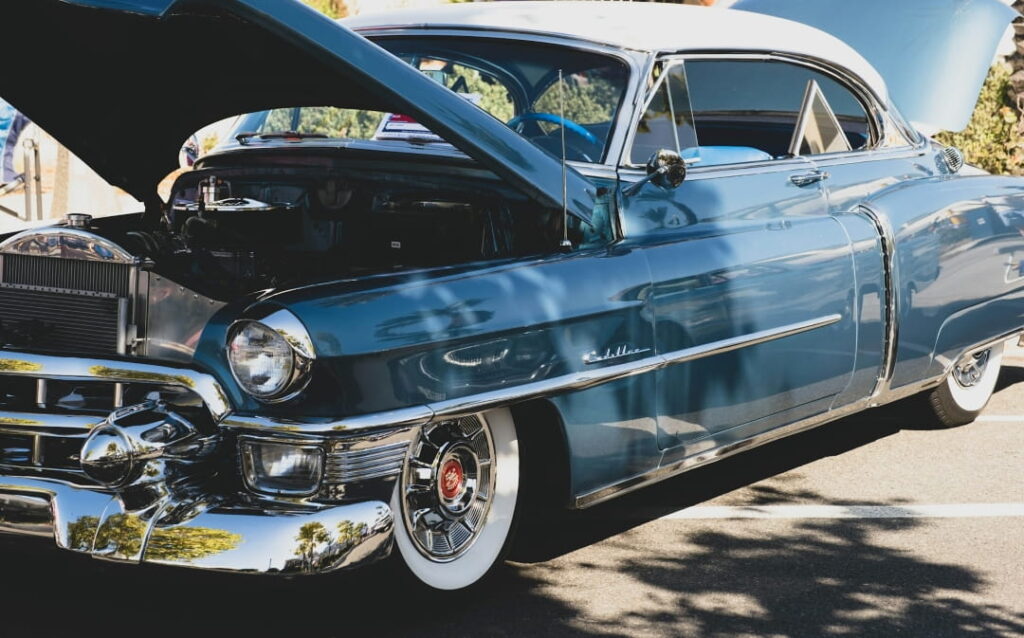
Auction selection is broad, and you may see restored cars, projects, and salvage classic cars in one place. That helps when you want a specific make and model. Still, history gaps are common.
For a first-time classic car buyer, the live sale is only the final act. Choosing the right lot starts before bidding opens. It involves studying the terms, estimating transport, and checking the title timing. If this is your first classic car, follow a system before emotions take over.
Follow this checklist:
Use simple math: hammer price plus fees, taxes, shipping, parts, and initial ownership costs. Build from real price ranges.
Review the example calculations:
Your real total is about $24,925. That is the figure that matters.
Many buyers focus on the bid and ignore the invoice. Sales tax, title fees, storage, and transport can change the deal. Some states tax the full transaction amount.
Budget for these items:
| Fee Type | What It Covers | Why It Matters |
| Buyer fee | Auction commission | Rises with the bid amount |
| Lot fee | Yard handling | Often charged on every car |
| Storage | Daily hold charge | Starts quickly if pickup is late |
| Title fee | Processing | Needed for transfer |
| Shipping | Carrier transport | Major cost on out-of-state buys |
| Sales tax | State tax | Can apply to the full value |
| Repair reserve | Surprise fixes | Critical on an older car |
Set your ceiling from market value, not excitement. Start with comparable sales, subtract fees, transport, and a repair buffer. Leave no room for emotional bidding. A collector car may feel special when the timer gets short, but the math does not change. Smart buyers decide the number early and refuse to move it.
Follow this routine:
Paperwork problems can ruin a solid classic car. A car may look restored, yet still be hard to register if the title is missing or branded. Verify lien status, signatures, and ownership records first. This matters even more when you’re buying from another state or when the car is not worth fixing.
Review the risks:
| Risk | Why It Matters | What to Check |
| Missing title | Registration may stop | DMV replacement-title rules |
| Branded title | Value may fall | Salvage, rebuilt, flood, junk |
| Open lien | Ownership is not clear | Lien release |
| Broken chain | Transfer delays | Signatures and names |
| State mismatch | Local rules may reject it | Home-state eligibility |
| Thin history | Value can collapse | Past ads, reports, records |
The UCC has been adopted in all 50 states, with versions also in the District of Columbia, Puerto Rico, and the U.S. Virgin Islands. That is why auction terms are broadly enforceable across U.S. jurisdictions.
Use a VIN decoder first. Compare trim, engine, and production details. Ask the seller for underside photos, cold-start video, and close-ups of seams and tags. Try to use a third-party inspection. Shiny paint can hide problems in older sheet metal. Verify that the VIN in the listing matches the car in the photos and any history reports. Check for consistent wear between the interior, engine bay, and mileage claims.
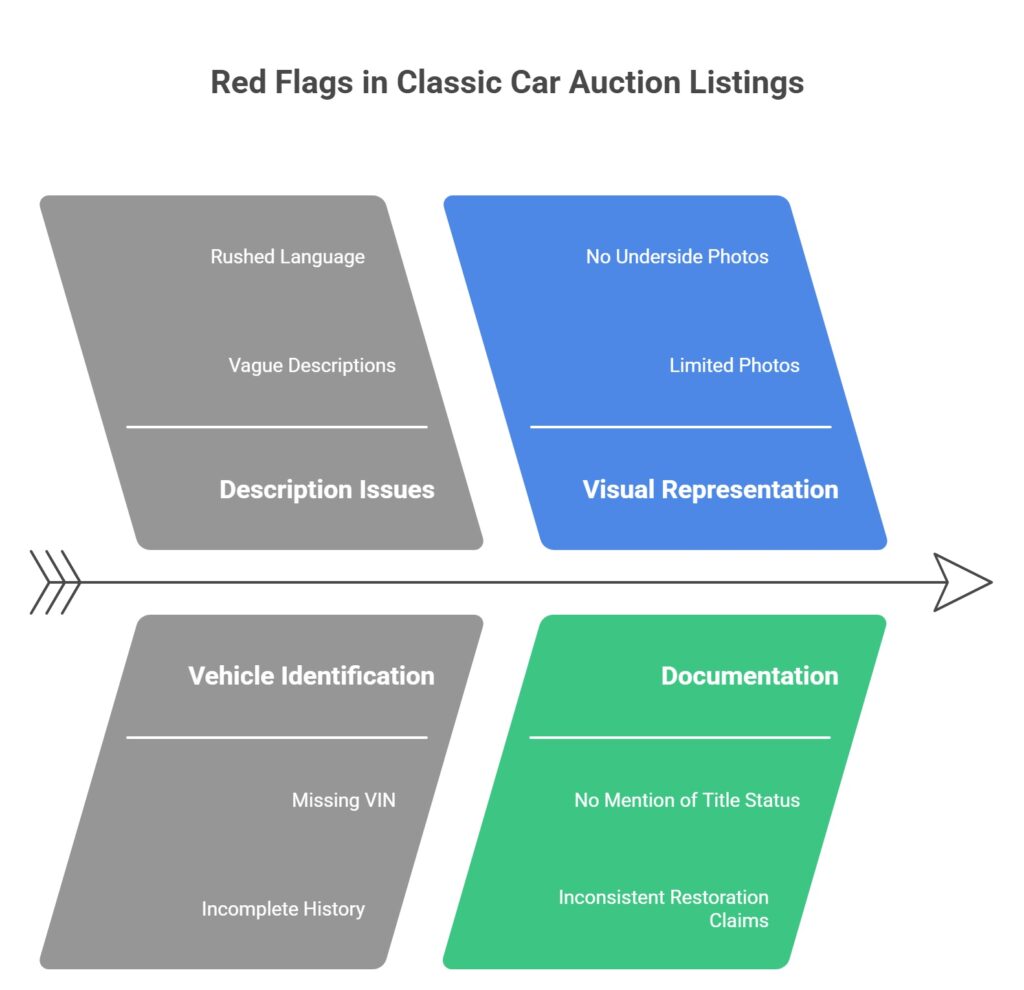
Strong listings answer key questions. Weak listings leave important details unclear. In the classic car world, missing detail matters more than flashy paint. Before you bid, slow down and look for the warnings below.
Warning checklist:
The National Highway Traffic Safety Administration (NHTSA) states that odometer fraud affects about 452,000 vehicles a year in the United States. Therefore, low mileage claims deserve extra scrutiny.
After you win, deadlines arrive fast, and auction yards allow little time for pickup. You usually must pay within days, then move the car before storage fees begin to accumulate. Review the invoice, confirm pickup, secure classic car insurance coverage, and check every title document before transport starts.
You still need documents, tax, and registration. States differ. California explains title transfer through the DMV. Texas explains motor vehicle tax through the Comptroller. California states that the transferor should file a Notice of Transfer and Release of Liability within five days.
Typical timeline:
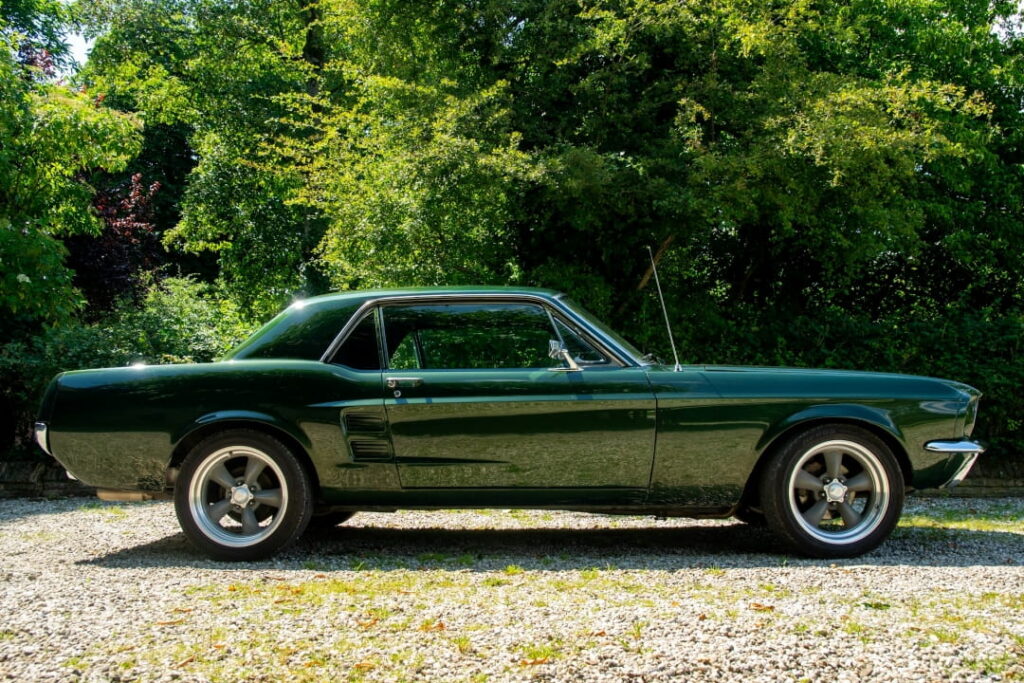
It can be, especially if you want more character than ordinary midsize cars provide. A sorted classic car can deliver enjoyment and event access, but classic cars often require storage, planning, and cash. Older classic cars require more maintenance and more attentive car ownership. Long-term value depends on documentation, originality, and how well the car is maintained over time.
Some classic cars appreciate, but not all. The strongest gains usually go to a collector car with good history, honest condition, scarce supply, and broad demand. A weak restoration or missing papers can flatten value fast. That is what makes a car truly valuable to many car enthusiasts.
Rarity helps. However, provenance, originality, and market trends matter just as much in the collector space. They’re particularly relevant when buyers compare quality instead of hype.
Liquidity depends on the next buyer’s confidence. A popular classic car with records and easy parts support will move faster than a heavily modified project. Cars made in bigger numbers can still sell well. Cars can also sit for months when the paperwork is weak, or the price ignores the market.
Focus on these basics:
Mileage matters less on a classic car. Age, originality, records, and quality work often matter more than in modern vehicles.
Not much. The broader automotive world shifts. However, this car market still follows design, sound, nostalgia, and community more than daily efficiency for most buyers.
Look for uneven gaps. Review weld seams, overspray, replacement tags, and frame damage. Compare records and photos. Use a third-party inspection.
These are title mismatch, transport damage, tax surprises, and registration delay. Confirm state rules and accepted title documents. Review local inspection requirements before payment.
Often, yes. A vintage vehicle or collector lot may get different catalog language. They may focus on originality and buyers who value story more than utility.
:format(webp)/vulcan.abetter.bid%2Fwp-content%2Fuploads%2F2026%2F09%2Fev.jpg)
:format(webp)/vulcan.abetter.bid%2Fwp-content%2Fuploads%2F2026%2F09%2Fflipping.jpg)
:format(webp)/vulcan.abetter.bid%2Fwp-content%2Fuploads%2F2025%2F05%2Fdonk-car.png)
:format(webp)/vulcan.abetter.bid%2Fwp-content%2Fuploads%2F2025%2F02%2Fscott-rodgerson-ffH_GkINfyY-unsplash.jpg)
:format(webp)/vulcan.abetter.bid%2Fwp-content%2Fuploads%2F2026%2F09%2Fcopart.jpg)

