


 FAQ
FAQ 
Auto Auction Blog
February 7, 2024
Buying a Salvage Title Car
:format(webp)/vulcan.abetter.bid%2Fwp-content%2Fuploads%2F2022%2F10%2F2022-10-05-11.30.40-150x150.jpg)


Customer Service
9 am - 6 pm EDT
Monday - Friday
International
+1 (302) 613 - 1026Toll-Free
+1 (888) 277 - 3182:format(webp)/vulcan.abetter.bid%2Fwp-content%2Fuploads%2F2026%2F02%2Fabb1.jpg)
If a car is beyond repair, the right move is to compare the total repair cost to the car’s current market value (ACV) and your state’s total-loss rules. When repairs meet or exceed that value, fixing the car usually isn’t worth it. Your practical options are to sell it as-is, list it at a salvage auction, recycle or scrap it, or donate it, depending on payout, title status, and how quickly you need to resolve the situation.
Take photos and get an estimate from a shop that can scan modules and check the structure. Compare the quote to similar cars with a clean title to understand the value of your car today. If the cost of repairs exceeds what buyers pay locally and the shop says repairs will likely expand, you’re already deciding whether to repair.
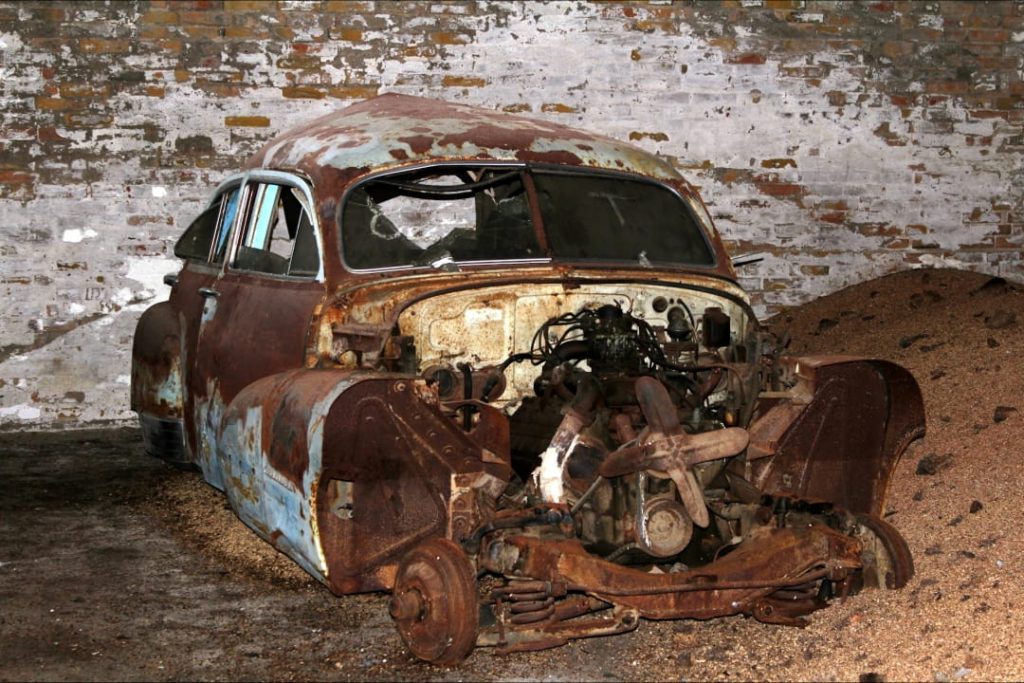
Some issues are obvious, like airbags that fired or doors that won’t shut. Others hide until panels come off, like a burned harness or cracked mount. Note warning lights, leaks, and noises. When structure, safety systems, and drivetrain are all affected, it’s likely expensive to repair.
Use this checklist to spot deal-breakers:
To judge a total-loss call, compare the repair cost to the market value and add hidden items like calibration and downtime. If the total exceeds the value, insurers often total it even if the engine can still operate. Ask for an itemized quote so you can see how much your car affects the value of the car and the cost of repairs.
For example, if your car’s current market value (ACV) is $9,000 and the initial repair estimate is $6,200, the repair-to-value ratio is about 69%. Once you add required post-repair calibrations ($600), towing and storage ($400), and likely supplements found after teardown ($800), the total repair cost rises to $8,000+, pushing the ratio above 85%. At that point, many insurers will classify the vehicle as a total loss rather than approve further repairs.
Many insurers use roughly 70–80% as a common total-loss threshold. However, the cutoff varies by state and policy.
A single estimate can miss damage. If you’re on the fence, choose a second inspection. It can help you determine the real costs. You can reduce the risk of a surprise repair bill. Ask a technician to scan modules, measure the frame, and check mounts and wiring. The repair may change after teardown. A careful mechanic can confirm what must be fixed now versus what can wait. This type of inspection is especially important for safety-related systems covered by U.S. Federal Motor Vehicle Safety Standards (49 CFR Part 571), which set requirements for vehicle structure, airbags, and electronic safety components
| Trigger | Possible Issue | Why It Matters | Recommended Action |
| The estimate seems too low for the damage | Frame, electronics, drivetrain | Hidden damage can double the bill | Repeat diagnostics, Photo documentation, Request adjuster review |
| New warning lights after “minor” work | Electronics, airbag network | Safety systems may fail later | Full scan, Save codes, Ask for supplement |
| Pulling or vibration on a test drive | Drivetrain, subframe, alignment | Tires and bearings wear fast, handling worsens | Road test, Measure points, Recheck alignment |
| Fluid leaks after the impact | Engine, cooling, seals | Small leaks can become a major repair | Pressure test, Clean and recheck, Update estimate |
| The repair timeline keeps extending | Parts, wiring, calibration | Storage fees rise, and you lose transportation | Confirm parts ETA, move the car, escalate to the adjuster |
A total loss can change the title status because states track severely damaged vehicles. If the insurer keeps the vehicle, it typically applies for a salvage brand. If you keep it, you may need an inspection before registration. Insurers may limit coverage until repairs are verified. This affects resale, insurance, and trade-in options on any used car.
State salvage and branding rules are defined in motor vehicle statutes, such as New York Vehicle and Traffic Law §429, which governs salvage branding, inspections, and title restrictions for severely damaged vehicles.
Selling a car with a salvage title? Plan for these realities:
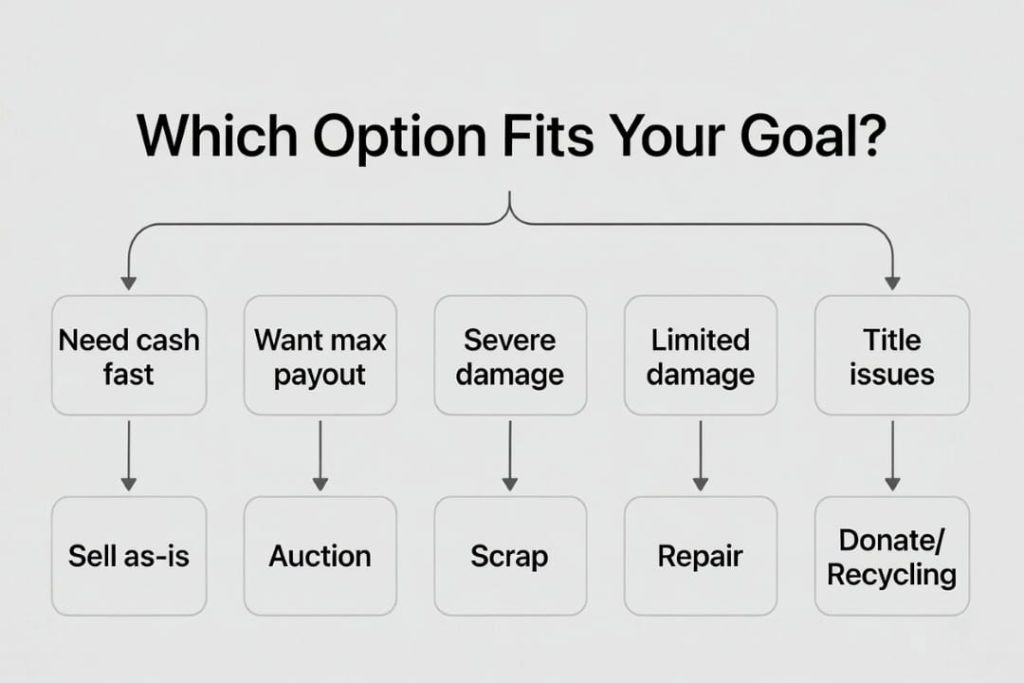
Once you confirm it’s not worth repairing, focus on return and paperwork. The best move is the one that gives the best value for your car without creating future problems. In practical terms, this means weighing three factors at the same time: how much cash you can recover, how long the process will take, and what legal or paperwork obligations remain after the car is gone. A faster option with lower payout may make sense if storage fees or lien issues are growing, while a higher-value option is better if the title is clear and timing is flexible.
Repairing a car makes sense when damage is limited. A car that’s four or five years old with a clean history may be worth repairing because replacement prices are high. If the vehicle is worth more than the cost of repairs, and repairing the car restores safety, you can repair your car once and be done. That can save you money in the long term and extend the life of your car. Shortcuts cause frequent repairs and ruin peace of mind.
To help you determine if it makes sense to repair, use these checks:
If you need speed, you can sell a non-running car as-is to a specialist buyer or list it privately with honest photos and disclosures. This is a fix or sell moment: if you cannot repair your vehicle, the car’s value is mostly in parts. If you still have a car payment, selling as-is can get you a different car sooner. You’re often better off putting that money toward a newer car than stacking a monthly payment on top of repairs.
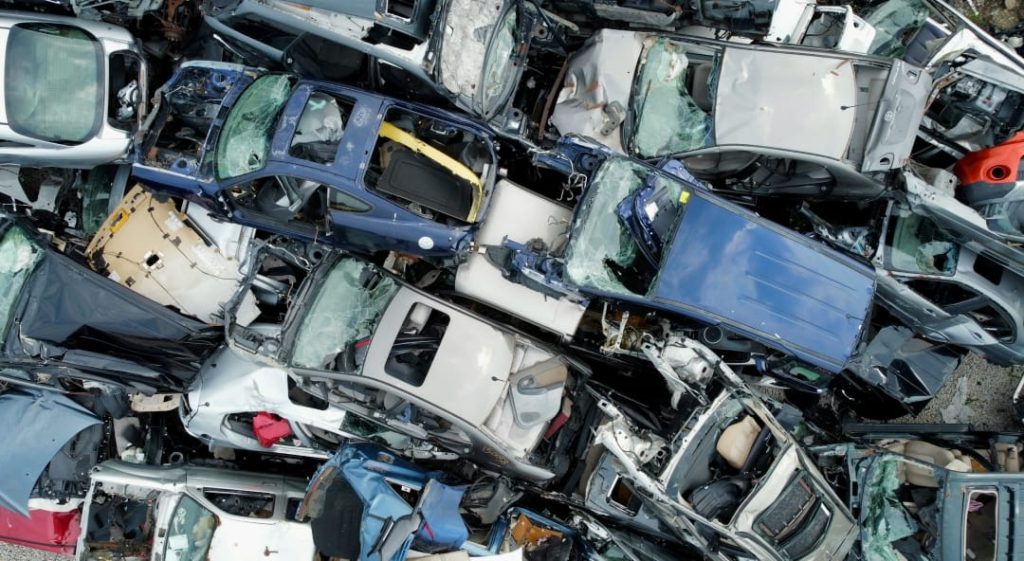
Donation and recycling reduce hassle when the car is not worth fixing, and storage is piling up, but donation may not be worth it if you need cash today. Recyclers pay for metal. Many charities can arrange towing. For an old car with severe rust or fire damage, recycling is usually the safest outcome.
| Option | Best For | What You Get | Key Paperwork |
| Donation to a charity | Low cash value, quick exit | Receipt, possible deduction | Signed title, Donation form |
| Recycling yard | Severe damage, unsafe shell | Payment by weight | Title or state form, ID |
| Parts recycler | Popular model with good components | Higher payout than scrap | VIN check, Bill of sale |
A salvage auction attracts rebuilders and dismantlers who price risk every day. It could be worth using when major parts are desirable. In practice, selling a car at auction depends on clear disclosures and strong photos.
To improve results at a salvage auction, do this:
Even when you skip a big repair, costs can keep coming. Plan towing, storage, and paperwork early. You’ll be able to get rid of your car quickly and avoid surprises. The most common issues arise from daily storage charges, unplanned towing moves, and delays in title or lien paperwork. These costs often accumulate quietly while decisions are pending, reducing your final payout or even exceeding the car’s remaining value.
Storage fees can snowball after a crash or breakdown. Still thinking, “Should I repair my car or sell it?” Call the facility, get the daily rate, and move the vehicle. If the car sits at a shop lot, set a deadline and tow it to a cheaper location. If you’re getting a new car, extra days can eat into your down payment for a new vehicle.
Common situations and what to do next:
| Situation | Typical Fee Risk | How To Reduce It | Best Next Step |
| Police tow after a collision | Daily storage and admin fees | Request release immediately | Tow to home or chosen yard |
| Body shop waiting on approval | Storage after the estimate window | Set a decision date | Authorize repair or move it |
| Impound for registration issues | Penalties plus daily fees | Bring documents quickly | Pay and remove the same day |
| Private-property tow threat | High private tow fees | Move within 24 hours | Store in a legal lot |
Be cautious with any buyer who offers to take a vehicle without a title or asks you to leave names blank. If you still owe a loan, settle the lien first, or you may never get the car back. The goal is to close the loop so tickets, tolls, and storage don’t land on you.
To stay protected, do these steps:
The most valuable car parts to remove before scrapping are components that can be resold independently and have consistent demand. These usually include the catalytic converter, factory wheels, battery, alternator, headlights, taillights, and electronic modules.
Keep coverage until pickup or transfer is complete, and you have proof. Then cancel and request any refund you can get for unused days. Dropping coverage early can cause issues if the vehicle moves.
Usually, you and the buyer handle it, but many recyclers and auction services file forms. Confirm who submits what, keep copies, and match the VIN and buyer details. Clean records help with a future trade-in.
Sometimes. It’s particularly relevant when the engine or transmission is valuable. However, auction fees and towing reduce the net, and payment can take longer. A junkyard is faster and may be better when the vehicle won’t start.
Yes. Ask for itemized labor, parts sources, and photos. Then, get a second opinion from another mechanic. Share the documentation with the adjuster. Request a review if needed.
:format(webp)/vulcan.abetter.bid%2Fwp-content%2Fuploads%2F2024%2F02%2Fjakub-nawrot-3FYqzBCSLHQ-unsplash.jpg)
:format(webp)/vulcan.abetter.bid%2Fwp-content%2Fuploads%2F2024%2F03%2Fartem-beliaikin-vAh9TyyI7wM-unsplash.jpg)
:format(webp)/vulcan.abetter.bid%2Fwp-content%2Fuploads%2F2024%2F01%2Fmc-kontext-WKl8K3zOwmk-unsplash.jpg)
:format(webp)/vulcan.abetter.bid%2Fwp-content%2Fuploads%2F2026%2F10%2Ffees1.jpg)
:format(webp)/vulcan.abetter.bid%2Fwp-content%2Fuploads%2F2026%2F10%2Flisting9.jpg)
:format(webp)/vulcan.abetter.bid%2Fwp-content%2Fuploads%2F2026%2F09%2Fcopart.jpg)

