


 FAQ
FAQ 
:format(webp)/vulcan.abetter.bid%2Fwp-content%2Fuploads%2F2024%2F04%2Fgetty-images-uH7zNDSoCLo-unsplash.jpg)
Auto Auction Blog
April 3, 2024
Clear Title vs Clean Title: What Is the Difference
:format(webp)/vulcan.abetter.bid%2Fwp-content%2Fuploads%2F2022%2F10%2F2022-10-05-11.30.40-150x150.jpg)


Customer Service
9 am - 6 pm EDT
Monday - Friday
International
+1 (302) 613 - 1026Toll-Free
+1 (888) 277 - 3182:format(webp)/vulcan.abetter.bid%2Fwp-content%2Fuploads%2F2025%2F08%2Fgetty-images-O9VVaPgB0LI-unsplash.jpg)
You can register a car without a title, but the process varies by state and vehicle history. For example, Vermont allows registration without a title for cars over 15 years old, while Texas may require a bonded title backed by a surety bond worth 1.5× the car’s value. Common solutions include applying for a duplicate title, using a bill of sale with supporting documents, or going through a bonded title process. About 8% of used car transactions in the U.S. involve title complications, so it’s a widespread issue with established legal workarounds. This guide explains what to do in each scenario.
A vehicle title is legal proof of ownership. This document contains the vehicle identification number, owner details, and any liens. The title record establishes your right to sell or transfer the vehicle.
Here’s why you need a title:

Understanding specific scenarios is vital. Research them and find the best approach for how to register a vehicle without a title. Lost paperwork, previous owner issues, or specific purchase circumstances often create title problems. What if a car has no title? Such situations require immediate attention.
With regard to theft-recovered cars, additional documentation may be required. These vehicles often have complex histories. Thus, they require extra verification. The procedure typically involves working with law enforcement before registration can proceed.
| Reason | Description | Solution Options |
| Lost or stolen title | The original owner misplaced the document | Apply for a duplicate vehicle title (via mail or in person) |
| Inherited vehicle | Previous owner deceased, title not transferred | Probate court or heir affidavit with proper forms |
| Abandoned vehicle | The car was repossessed or left behind | Bonded title or mechanic’s lien process |
| Auction purchase | Buying a car at auction without a clear title | Dealer certificate or bonded title application |
| Out-of-state issues | Title problems from another state | Contact the original state’s department by mail |
| Lienholder complications | The lienholder retains the title due to an unpaid loan | Pay off the loan or obtain the lienholder release form |
According to the National Motor Vehicle Title Information System, approximately 8% of used car transactions involve title complications annually.
Three primary legal methods exist: replacement title, bonded title, or registration without title in select states. Still wondering what to do if you can’t find your car title? This depends on your specific situation.
A Better Bid reports that nearly 1 in 10 vehicles sold at auction come without a clean title, making replacement titles a common requirement for buyers. Contact your state’s DMV. If you’re unable to locate the original title, obtain a duplicate one. Provide proof of identity and pay fees. Processing takes one to three weeks through the mail. Note that some states require the applicant to appear in person at the county office.
Using a VIN decoder service can verify vehicle information before applying for documentation. This step ensures all details match official records and prevents delays. Understanding how to get a title with only a bill of sale helps you choose the right replacement method.
This title provides legal ownership when documentation is unavailable. Purchase a surety bond worth 1.5 times the vehicle’s value. This procedure requires paperwork and state approval. The bond remains active until a specific date. It’s typically three years. Pay the bond premium upfront before receiving approval.
Consider the value of a salvage car when analyzing bond amounts, as damaged vehicles require different calculations. The bond amount reflects potential claims from previous owners who might appear within one year.
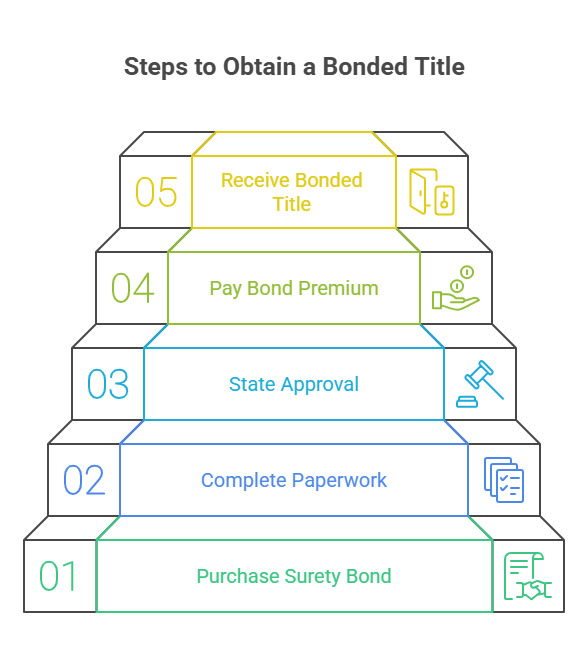
Key requirements include:
Vermont, Maine, and New Hampshire allow registration without traditional titles for certain older vehicles. Each state has specific age requirements and limitations for this process. You must follow the exact procedures and pay all required fees to qualify for title-exempt registration. Only eligible vehicles meeting specific criteria qualify for this procedure.
The registration process requires alternative documentation to establish ownership and vehicle details. Each state’s Department of Motor Vehicles specifies acceptable paperwork. They help with realizing how to register a vehicle without a title.
Cannot provide proof through traditional means? In this case, alternative paperwork becomes crucial. The owner must present sufficient evidence to satisfy legal requirements. Most states require multiple forms of documentation to complete the registration process successfully.
The following documents are typically required:

Auction purchases often lack clear titles, requiring special procedures for registration. Contact the auction house for available documentation, then determine which state process applies to your specific situation based on local law requirements. Passenger vehicles from auctions typically require additional verification compared to commercial vehicles.
A Better Bid Pro Tip:
Before bidding on any vehicle, check if the title status is listed as “clean,” “salvage,” or “no title.” If the title is missing, focus on states like Vermont or Georgia that offer registration options for older or title-exempt vehicles.
Most insurers require proof of ownership before issuing coverage for any vehicle. However, some insurers accept alternative papers for specific circumstances. This can make obtaining insurance more difficult for vehicles without traditional vehicle title documentation.
Understanding specific requirements helps you prepare for registration. Different types of coverage have varying documentation requirements. For example, liability coverage may require less documentation than comprehensive policies.
| Insurance Scenario | Title Required? | Alternative Documents Accepted |
| Standard full coverage policy | Yes | Bill of sale, current registration |
| Temporary coverage | Sometimes | VIN verification, auction papers |
| Storage policy | No | Any ownership proof |
| Liability only coverage | Varies by company | Registration, inspection records |
| Commercial truck coverage | Yes | Fleet registration, business license |
12% of policies involve vehicles with incomplete title documentation.

Many people make costly errors during registration without proper titles. Understanding these pitfalls helps you navigate the system successfully. Complete papers correctly to save money and prevent legal complications.
Common registration mistakes include:
Registering a vehicle without a title requires following specific legal procedures. They vary by state law. However, solutions exist for most situations involving missing documentation. Replacement titles, bonded titles, or alternative registration methods are available options. Learning how to register a vehicle without a title may save time and help avoid future problems.
Family members cannot register motor vehicles on your behalf. Proper legal authorization is needed. Most states require the registered owner to complete the process personally. Alternatively, they need to provide notarized power of attorney documentation.
Your state’s law defines specific penalties. Selling vehicles without proper titles results in legal issues. The severity varies based on circumstances and intent.
Potential legal issues include:
Fraud charges if you misrepresent ownership.
Civil liability for buyer’s losses.
Criminal penalties for selling stolen property.
Fines for violating state motor vehicle regulations.
A wild title refers to specific vehicles with certain problems. These are forged signatures, altered information, or fraudulent transfer documentation. Invalid papers cannot be used for legitimate registration or transfer purposes.
Purchasing stolen vehicles may cause significant consequences. Law enforcement may seize the car. Taking preventive measures protects your investment.
Steps to protect yourself include:
Running VIN decoder searches before purchase.
Verifying seller identity and ownership documentation.
Checking theft-recovered cars databases.
Inquiring about the vehicle’s history with authorities.
A bonded title establishes ownership when documentation is missing. A salvage title indicates the vehicle was damaged beyond economical repair. The value of a salvage car is typically much lower than comparable undamaged vehicles.
:format(webp)/vulcan.abetter.bid%2Fwp-content%2Fuploads%2F2023%2F07%2Ftara-meinczinger-kVakWKgidgE-unsplash.jpg)
:format(webp)/vulcan.abetter.bid%2Fwp-content%2Fuploads%2F2022%2F10%2F2022-10-05-11.31.58-150x150.jpg)
:format(webp)/vulcan.abetter.bid%2Fwp-content%2Fuploads%2F2024%2F05%2Fyoung-shih-gqypxOb4_R0-unsplash.jpg)
:format(webp)/vulcan.abetter.bid%2Fwp-content%2Fuploads%2F2026%2F10%2Ffees1.jpg)
:format(webp)/vulcan.abetter.bid%2Fwp-content%2Fuploads%2F2026%2F10%2Flisting9.jpg)
:format(webp)/vulcan.abetter.bid%2Fwp-content%2Fuploads%2F2026%2F09%2Fcopart.jpg)

