


 FAQ
FAQ 
Auction Tips
February 21, 2023
How Much Cheaper Are Cars at Dealer Auctions?
:format(webp)/vulcan.abetter.bid%2Fwp-content%2Fuploads%2F2022%2F10%2F2022-10-05-11.31.58-150x150.jpg)


Customer Service
9 am - 6 pm EDT
Monday - Friday
International
+1 (302) 613 - 1026Toll-Free
+1 (888) 277 - 3182:format(webp)/vulcan.abetter.bid%2Fwp-content%2Fuploads%2F2025%2F08%2Fgetty-images-dsLmP47anSs-unsplash.jpg)
:format(webp)/vulcan.abetter.bid%2Fwp-content%2Fuploads%2F2022%2F10%2F2022-10-05-11.30.40-150x150.jpg)
To get a car auction license, you must register a business, meet your state’s dealer requirements, and apply through the licensing authority. This license gives you access to dealer-only auctions where vehicles are sold at wholesale prices, allowing you to buy inventory below market value and resell for profit. This guide explains the full process, required documents, costs, and how to avoid common mistakes that can lead to application rejection.
This license is essentially a specialized bidding license. It grants you exclusive access to wholesale auctions. Here, only licensed dealers can participate in bidding. These restricted car auctions feature thousands of motor vehicles. They aren’t available to the general public. Consider inventory from major dealerships, rental companies, and fleet operators. Licensed dealers gain ownership rights to purchase vehicles directly from these exclusive venues. Buyers operating without a dealer license remain restricted to public auctions with limited inventory selection.
Without this license required for dealer participation, you cannot bid at dealer-only events. You also cannot organize a legitimate car business or access the most profitable vehicle acquisition channels.
The benefits of obtaining a car auction license include:

Different dealer license types serve various business models and vehicle categories. This depends on your intended operations and target market location. Your choice of license type directly affects your auction access privileges. It also determines the volume of cars you can sell annually, the specific motor vehicle auction venues available to your business, and ultimately, the money you can generate through vehicle sales.
Each car auction license category has specific requirements and limitations. They determine your business scope and operational capabilities within the automotive industry. They also help obtain your initial license. This concerns selling restrictions and ownership transfer procedures.
| License Type | Vehicle Limit | Business Requirements | Auction Access |
| Wholesale Dealer | Unlimited | Physical office, inventory space | Full access to all auctions |
| Retail Dealer | Unlimited | Showroom, customer parking | All auctions plus retail sales |
| Broker License | 12 per year | Office space only | Limited auction access |
| Motorcycle Dealer | Unlimited motorcycles | Specialized requirements | Motorcycle auctions only |
Most states require specific qualifications and business foundations. Before approving your dealer license application for auction access, responsible boards review your plans. These comprehensive requirements ensure you have the necessary financial stability and credibility. The corresponding infrastructure is needed. No matter whether you plan to sell a car at auction occasionally or operate a full-scale dealership with regular auction participation. Meeting these essential criteria is absolutely crucial. Otherwise, successful car auction license approval is impossible. Maintain ongoing compliance with state motor vehicle regulations.
Essential requirements include:
Approximately 65% of first-time applicants are rejected. It’s due to inadequate location documentation or insufficient coverage.
The licensing application process varies significantly by state, but follows similar fundamental steps nationwide for obtaining your car auction license. Most complete applications take 30-60 days for processing once submitted. However, complex cases may require additional review time. This concerns financing arrangements or corporate structures.

Understanding vehicle history is crucial throughout this process. Many dealers encounter situations like buying a car with a salvage title. Such a situation requires proper disclosure and documentation procedures. Starting early and gathering all required paperwork, proof of registration, and business establishment paperwork beforehand significantly speeds up license approval times. This helps you establish your dealership operations more quickly.
Your comprehensive application package must include specific paperwork. It should prove your business’s legitimacy, financial stability, and operational readiness for auction participation. Missing paperwork causes immediate rejection. Thus, carefully review all requirements before submission to avoid costly delays.
Pro Tip from A Better Bid: Prepare all documents in advance and keep digital copies ready. This speeds up corrections if the licensing board requests changes and can cut approval time by weeks.
Preventable errors are common among first-time applicants. Such mistakes result in license denial or significant processing delays. Grasp these common pitfalls. Ensure smoother approval for your car auction license application.
Learning from others’ experiences can save months of waiting time. The auction license price becomes irrelevant if your application faces rejection due to easily preventable oversights that experienced applicants know to avoid.
Common rejection reasons include:

Total costs for obtaining a dealer license range from $5,000 to $15,000. This depends on your state location and specific business type requirements. This includes application fees, bond premiums, insurance costs, and educational requirements for car auction license approval.
California dealers typically pay the highest licensing costs. The average price is between $12,000 and $18,000 for a complete setup.
Most dealer licenses require annual renewal with updated documentation. Continuing education completion and maintaining insurance coverage are also essential conditions. Proper maintenance prevents suspension and protects your valuable privileges for continued business operations. Remember to renew your dealer license before the expiration date. This helps maintain uninterrupted auction access. Dealers must also renew their surety bonds and insurance policies annually. Remain compliant with state regulations.
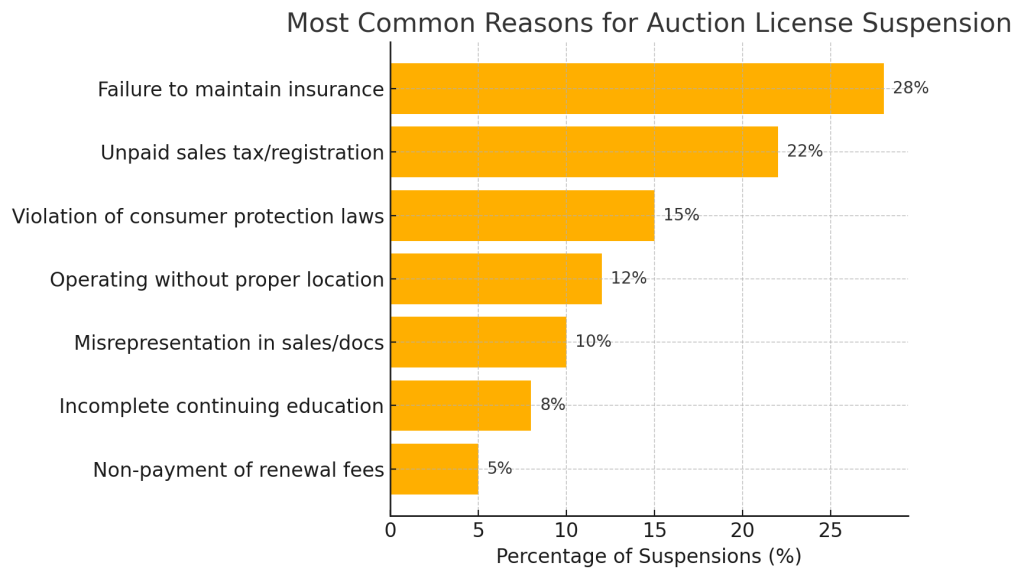
Dealer license suspension can devastate your automotive business. It can also immediately block your access to all dealer auctions. Your primary vehicle acquisition channels and inventory sources will be cut off. Understanding specific violation triggers helps you maintain strict compliance and avoid costly business interruptions. The motor vehicle department continuously monitors dealer activities and acts swiftly on violations, making prevention essential for business continuity.
Suspension typically occurs due to:
A Better Bid Statistics Insight: Most suspensions come from not maintaining insurance (28%), unpaid taxes/fees (22%), and consumer law violations (15%). Other causes include improper location (12%), misrepresentation (10%), missed education (8%), and unpaid renewals (5%).
If obtaining a traditional dealer license proves challenging due to location restrictions or financing limitations, several alternative arrangements provide limited access for your automotive business needs. These options may not offer full access to all wholesale auctions, but can help you establish initial market presence and build toward full selling permission.
Consider these practical options:
Research indicates that 40% of aspiring dealers initially pursue alternative arrangements.
When exploring these alternatives, consider using a VIN decoder. Research the vehicle’s history thoroughly. This procedure becomes crucial when you cannot rely on dealer disclosure requirements.
Obtaining a dealer license is associated with careful preparation. You’ll need comprehensive documentation. Additionally, you should meet all state requirements for dealer certification. Success depends on establishing a legitimate business foundation. Securing appropriate insurance and bonding and maintaining ongoing compliance with complex automotive regulations are vital parts of the registration process.
The most streamlined processes are typically observed in Montana and Wyoming. They have lower bond requirements and fewer bureaucratic hurdles for new dealers.
No, dealer licenses cannot be legally rented or borrowed. However, some dealers offer consignment services for specific purchases.
Most dealers hold inventory for 60-90 days before consigning to car auctions. However, the term varies. Market conditions and vehicle type determine the duration.
Attending dealer auctions without proper permission violates state law. Consequences are harsh – immediate removal and potential legal action.
Specific penalties include:
Permanent ban from auction facilities.
Fines up to $10,000 per violation.
Criminal charges for fraud or misrepresentation.
Civil liability for any transactions attempted.
Your dealer license type determines which vehicles you can purchase. Most general dealer licenses cover motorcycles, but RVs often require specialized endorsements.
:format(webp)/vulcan.abetter.bid%2Fwp-content%2Fuploads%2F2023%2F02%2Fgetty-images-4D4_sjiYu-Y-unsplash.jpg)
:format(webp)/vulcan.abetter.bid%2Fwp-content%2Fuploads%2F2024%2F01%2Fartem-beliaikin-pWe4gf7jajg-unsplash.jpg)
:format(webp)/vulcan.abetter.bid%2Fwp-content%2Fuploads%2F2026%2F09%2Fev.jpg)
:format(webp)/vulcan.abetter.bid%2Fwp-content%2Fuploads%2F2026%2F09%2Fflipping.jpg)
:format(webp)/vulcan.abetter.bid%2Fwp-content%2Fuploads%2F2026%2F09%2Fcopart.jpg)

