


:format(webp)/vulcan.abetter.bid%2Fwp-content%2Fuploads%2F2026%2F03%2F1abb4.jpg)
 FAQ
FAQ 
Auction Tips
January 17, 2024
How to Buy a Car at Auction Without a Dealer License
:format(webp)/vulcan.abetter.bid%2Fwp-content%2Fuploads%2F2022%2F10%2F2022-10-05-11.30.40-150x150.jpg)


Customer Service
9 am - 6 pm EDT
Monday - Friday
International
+1 (302) 613 - 1026Toll-Free
+1 (888) 277 - 3182To get a dealer’s license in Florida, you must secure a compliant business location, complete the required pre-licensing education, obtain a $25,000 surety bond, prepare insurance availability, and submit the HSMV 86056 application with fees to the state. Approval is granted only after a compliance inspection confirms that your office, signage, display area, and record-storage setup meet Florida’s dealer requirements.
The Florida Department of Highway Safety and Motor Vehicles oversees dealer licensing for vehicle dealers. Your type of license depends on how you plan to sell. You can choose retail, wholesale dealer, auction dealer, or recreational vehicle sales. Many first-time applicants search “how to become a car dealer in Florida.” However, approval depends on proof, not promises. If you want to get a license, prepare for every requirement before you submit. Many independent dealers start small, then expand once they understand the compliance system.
To get a car dealer’s license, expect these core requirement areas:
Curbstoning is selling vehicles like a dealer while claiming to be a private seller. Under Florida statute 320.27, anyone who buys, sells, or deals in three or more motor vehicles in 12 months can be presumed to be operating as a motor vehicle dealer. That line is easy to cross if you advertise multiple vehicles online, flip titles, or take deposits repeatedly. The proper solution is to apply for a dealer license and operate openly with the right paperwork. According to Florida law, repeated vehicle sales for profit without proper licensing can trigger fines and criminal penalties.
If you’re wondering when it is risky, look for these common curbstoning warning signs:
Before the dealer license application, build one packet that proves your business is registered, the site is lawful, and your finances meet state rules. A clean packet also helps the compliance examiner schedule your visit faster. Keep one scanned copy of every page because audits can request the same items later. Whether you plan to operate as one of many used car dealers in Florida or focus only on wholesale, documentation is everything.
The checklist below covers what you need to provide and what must be submitted with your application:
To get a dealer license, you register the business, lock in the site, finish a pre-licensing dealer training class, arrange insurance and surety bond, submit the packet, and then pass inspection. After you’re approved by the Florida Department, you can operate and renew your license on schedule.
The main application form for many categories is Form HSMV 86056, often referenced as the dealer license application form. It’s long because it covers more than one license category, so match each section to your type of license and ownership structure. Use the exact legal name from the Florida Division of Corporations so it matches your lease and bank records. To avoid delays, complete the dealer license application carefully and review each attachment before mailing. If anything is unclear, contact the Florida Department before you send payment.
To keep momentum, follow this order:
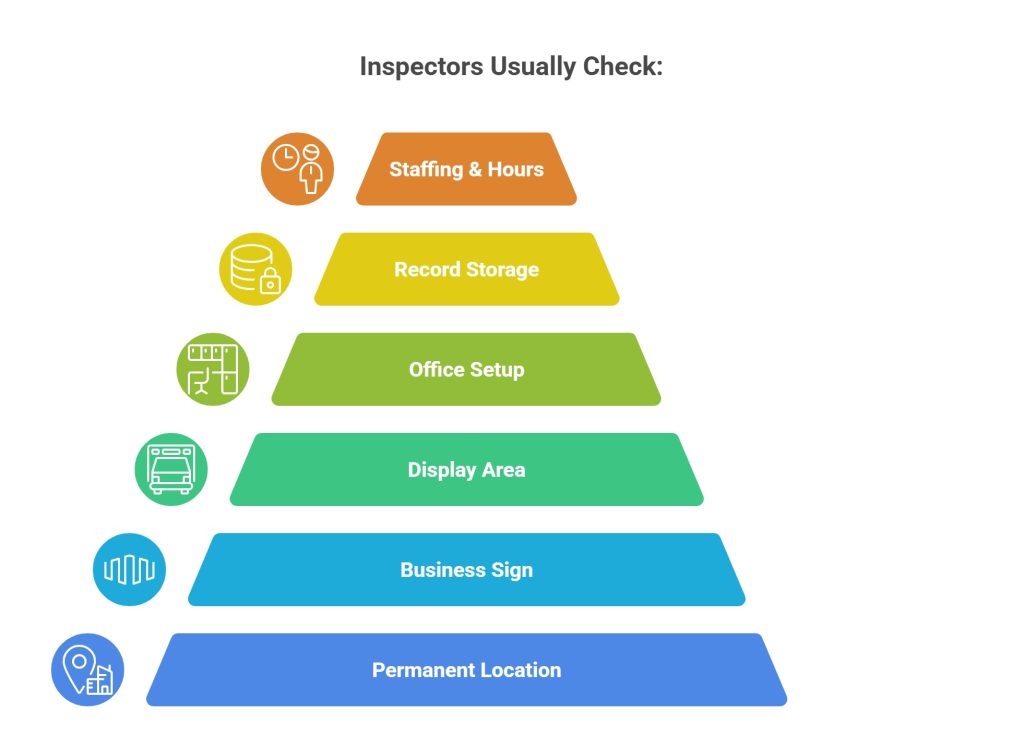
After your packet is logged, a compliance examiner schedules a visit. The inspection is less about inventory and more about whether the operation is real, permanent, and document-ready. The location must be a permanent place of business. If the location is temporary or shared without exclusive control, it often fails inspection. Inspectors also confirm that your sign and office support lawful sales and proper records. If you want immediate access to dealer auctions, treat this visit as the final gate.
Inspectors usually verify:
Costs vary by county and model, but the core state costs are predictable. The state commonly references a $300 main-location fee and a $25,000 surety bond (or approved alternative). Insurance pricing depends on whether you do retail test drives or operate wholesale-only. Rent and signage costs vary locally, but they can be your biggest fixed overhead.
| Cost item | Typical range | What drives the price |
| Application fee | ~$300 per main location | Set by the Department of Highway Safety |
| Surety bond/dealer bond | Varies | Credit + bond amount (often $25,000) |
| Insurance | Varies | Retail vs wholesale, limits, claims |
| Lot rent | Varies | County, frontage, site size |
| Setup (sign/office/storage) | $200–$2,000+ | Permits, lighting, buildout |
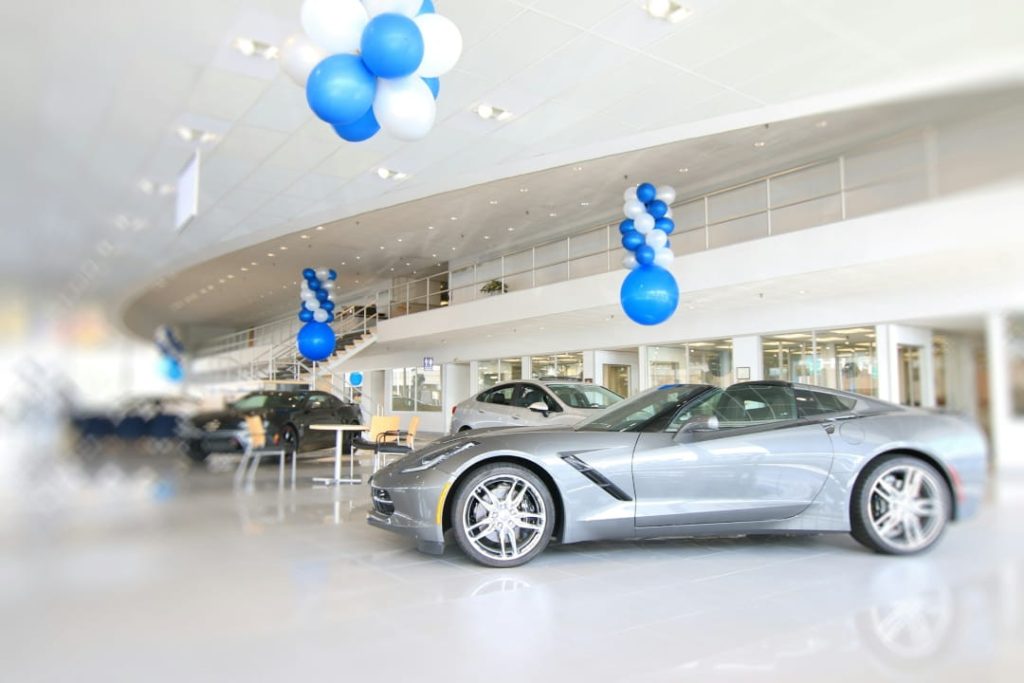
To pass inspection, the site must look permanent, controlled, and able to protect buyer documents. Location must match what you submitted – same address, same name, same boundaries. Keep the sign visible and the office functional, not a ‘virtual-only’ arrangement. Store titles and contracts in a secure place so you can respond quickly to requests. The table below shows what usually passes and fails.
| Requirement | Pass Example | Fail Example | Evidence Needed |
| Signage | Fixed sign, correct business name, readable from the road | Paper banner, wrong name, hidden sign | Photos; permit if required |
| Display area | Marked spaces under your control | Vehicles staged on street/neighbor lot | Lease pages; photos of the lot |
| Office setup | Enclosed office, desk, phone, posted hours | No office, shared table, no phone | Interior photos; utilities |
| Record storage | Locked cabinet + organized deal folders | Loose titles/contracts in vehicles | Cabinet photo; filing plan |
A lot is compliant when the address matches approval, the business operates during posted hours, and records are secure and retrievable. This standard applies to both motor-vehicle and recreational-vehicle dealers. It also reduces risk when handling salvage vehicles in Florida, where disclosure and branding are checked closely.
Not everyone needs a full retail setup. Some people want the lowest overhead to test the market, while others need a full lot for growth. A hosted model may reduce rent, but your records and signage must still meet compliance requirements. Private selling is legal. However, buying a car without a license repeatedly can look like curbstoning under the “three vehicles within a 12-month period” presumption. Choose the option that aligns with your operational plan and risk tolerance. If your goal is to get a Florida auto dealer license and grow long-term, don’t ignore this step.
| Option | Best for | Pros | Cons |
| Full Florida automobile dealer license | Retail public sales | Branding, control, and dealer license plates | Higher fixed costs |
| Hosted model | Low-volume start | Shared overhead, guidance | Less control over compliance |
| Private seller | Occasional personal sales | No licensing overhead | Easy to cross the legal threshold |
If your site and documents are ready, many applicants finish in a few weeks to a couple of months. Delays usually come from zoning letters, missing attachments, or an unready sign and office. Submitting a complete packet is the fastest way to get your Florida approval.
Your first months set your reputation. Keep inventory small, document every title step, and standardize your buyer paperwork. Use a VIN decoder before listing vehicles. Make sure that the trim and safety equipment match your ad and buyer forms. In practice, this is also the period to set up repeatable workflows: create a simple log to track every customer inquiry, establish a refund/hold-deposit policy in writing, and assign a single folder for each vehicle so nothing gets lost.
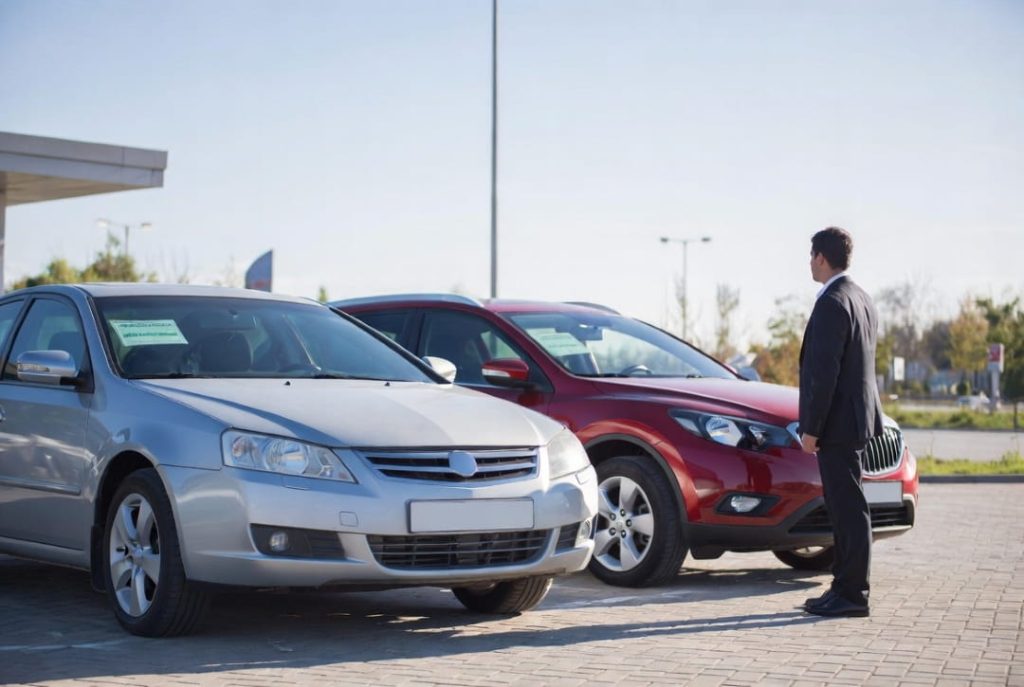
A Florida auto dealer license allows you to buy and sell under your business name, but it creates duties. Vehicle dealers must keep deal documents, handle titles correctly, and maintain bond and insurance coverage. For tax accounts, you typically register through the Florida Department of Revenue and file the local sales tax correctly. Category limits matter: a wholesale dealer cannot retail to the public, and auction categories have their own boundaries.
Below, a helpful checklist is offered:
Do:
Don’t:
Getting licensed is manageable when you treat it like a compliance project and follow the order. For motor vehicle dealers in Florida, the biggest wins are clean paperwork and a ready location. If you’re joining an automobile dealers association, ask for local compliance tips – many local dealers do.
Unannounced audits are more likely after consumer complaints, missing titles, repeat paperwork errors, or suspicious advertising patterns. They also happen after ownership changes or when tax filings and records don’t match.
Sometimes, but each dealer must have separated space, clear signage, and control of records and office access. Shared space without separation often fails inspection and local location rules.
Usually no. Inspectors focus on a permanent office, a proper sign, secure records, posted hours, and control of the display area, not the inventory count.
A dealer may issue a temporary tag after a completed sale when paperwork supports title and registration processing. It must be issued through the dealership account for that specific buyer and vehicle.
Yes. Even without retail test drives, wholesale activity still involves custody and liability exposure. Insurance should match your operations and remain active alongside your bond.
:format(webp)/vulcan.abetter.bid%2Fwp-content%2Fuploads%2F2024%2F01%2Fartem-beliaikin-pWe4gf7jajg-unsplash.jpg)
:format(webp)/vulcan.abetter.bid%2Fwp-content%2Fuploads%2F2026%2F02%2Fcover25.jpg)
:format(webp)/vulcan.abetter.bid%2Fwp-content%2Fuploads%2F2023%2F02%2Fgetty-images-4D4_sjiYu-Y-unsplash.jpg)
:format(webp)/vulcan.abetter.bid%2Fwp-content%2Fuploads%2F2026%2F09%2Fev.jpg)
:format(webp)/vulcan.abetter.bid%2Fwp-content%2Fuploads%2F2026%2F09%2Fflipping.jpg)
:format(webp)/vulcan.abetter.bid%2Fwp-content%2Fuploads%2F2022%2F10%2F2022-10-05-11.31.58-150x150.jpg)
:format(webp)/vulcan.abetter.bid%2Fwp-content%2Fuploads%2F2026%2F09%2Fcopart.jpg)

