


 FAQ
FAQ 
:format(webp)/vulcan.abetter.bid%2Fwp-content%2Fuploads%2F2024%2F04%2Fgetty-images-uH7zNDSoCLo-unsplash.jpg)
Auto Auction Blog
April 3, 2024
Clear Title vs Clean Title: What Is the Difference
:format(webp)/vulcan.abetter.bid%2Fwp-content%2Fuploads%2F2022%2F10%2F2022-10-05-11.30.40-150x150.jpg)


Customer Service
9 am - 6 pm EDT
Monday - Friday
International
+1 (302) 613 - 1026Toll-Free
+1 (888) 277 - 3182:format(webp)/vulcan.abetter.bid%2Fwp-content%2Fuploads%2F2025%2F06%2F20250611_0000_Impounded-Vehicles-Yard_simple_compose_01jxdt6wb7et99tx8fxz6r9q2s.png)
Finding an abandoned vehicle can present an opportunity, but you cannot simply take ownership without following the appropriate legal procedures. The process to claim an abandoned vehicle and obtain a title involves specific steps, documentation, and patience. Understanding how to get a title for an abandoned vehicle legally protects you from potential theft charges and ensures a legitimate ownership transfer. If you want to know how to find such a vehicle, the following information will help you.
An abandoned motor vehicle must meet specific criteria before you can claim ownership. Most states consider a car abandoned when it’s left without permission on public or private property for a certain number of days. The vehicle typically shows signs of neglect or appears inoperable. Any person seeking to claim such a vehicle needs to know these requirements.
| Criteria | Details |
| Period | 24-72 hours on public property, 30+ days on property |
| Condition | Inoperable, damaged, or missing essential parts |
| Location | Left without the owner’s permission |
| Registration | Often expired or missing plates |
| Owner Contact | No response to notification attempts |
| Value Assessment | It may be worth less than the accumulated towing or storage fees |

Before attempting to claim any vehicle, you must verify its abandonment status through proper channels. Simply assuming a car is abandoned can lead to theft charges if the owner is traceable. Most states make you report the vehicle first and allow authorities to determine its status. This process is commonly used to prevent theft accusations.
Information to find and verify abandonment status:
According to the National Insurance Crime Bureau, approximately 721,885 vehicles were reported stolen in 2022, making proper verification essential. Many of these may appear lost to their owners.
Yes, you may claim an abandoned motor vehicle, but only after following your local legal process. The procedure varies significantly between jurisdictions, and some jurisdictions make it nearly impossible for citizens to buy abandoned cars. You’ll typically need to prove the vehicle was properly abandoned, contact the owner, pay associated fees, and wait through designated time periods. Success depends on meeting all legal requirements and the vehicle’s history. Those who want to proceed must apply patience.
Pro Tip: Some abandoned vehicles are auctioned with “no title”, but may be eligible for bonded or rebuilt titles depending on the state. Always verify before bidding or investing.

Claiming an abandoned vehicle can offer benefits, but significant drawbacks exist. While you might obtain a vehicle at minimal cost, the procedure is time-consuming and doesn’t guarantee success. Consider both advantages and disadvantages before proceeding, especially if you want to avoid costly mistakes.
| Pros | Cons |
| Low acquisition cost | Complex legal process |
| Potential restoration project | May have mechanical issues |
| Parts value recovery | Expensive bonded vehicle title requirements |
| Clear title once obtained | Long waiting periods |
| Legal ownership protection | Potential owner return claims |
| May be a good option during the best time to buy a used car | Storage costs during the procedure |
Obtaining a title for an abandoned vehicle is associated with collecting numerous documents. Along with the paperwork, you’ll need proof of abandonment, evidence of contact attempts, fee payments, and various state-specific forms. The DMV typically asks for an application for a certificate of title, bond documentation, and verification that you’ve met all legal requirements. Proper documentation is crucial for successful vehicle title transfer and legal ownership establishment.
The legal process varies but follows similar patterns. Most jurisdictions require multiple steps, waiting periods, and documentation before allowing title shifts. Understanding your state’s requirements helps ensure you finish the procedure correctly. Determine these steps and apply them systematically.
Process steps:
A Better Bid studies show that only about 15% of abandoned vehicle claims result in successful title transfers due to complex requirements and owner reunification. Many vehicles remain unclaimed due to these challenges.
Once you get a bonded title for the abandoned vehicle, you gain legal ownership rights; however, bonded titles come with restrictions and potential complications. You can register, insure, and use the vehicle, However, selling may be difficult due to the bond requirement. The title typically converts to a standard certificate of title after a specified period without ownership disputes, usually 3-5 years, depending on your state.
Common errors during the procedure can result in serious legal consequences. Many people assume they can take possession before completing proper procedures, leading to theft charges. Understanding potential pitfalls helps you avoid expensive mistakes, especially when dealing with what appears to be lost property.
Find the following critical mistakes:
13% of abandoned vehicle claims face dispute or reversal due to a reappearing owner, according to A Better Bid data. In 62% of these disputes, the vehicle is returned to the original owner, but 41% of claimants receive partial reimbursement for documented expenses.
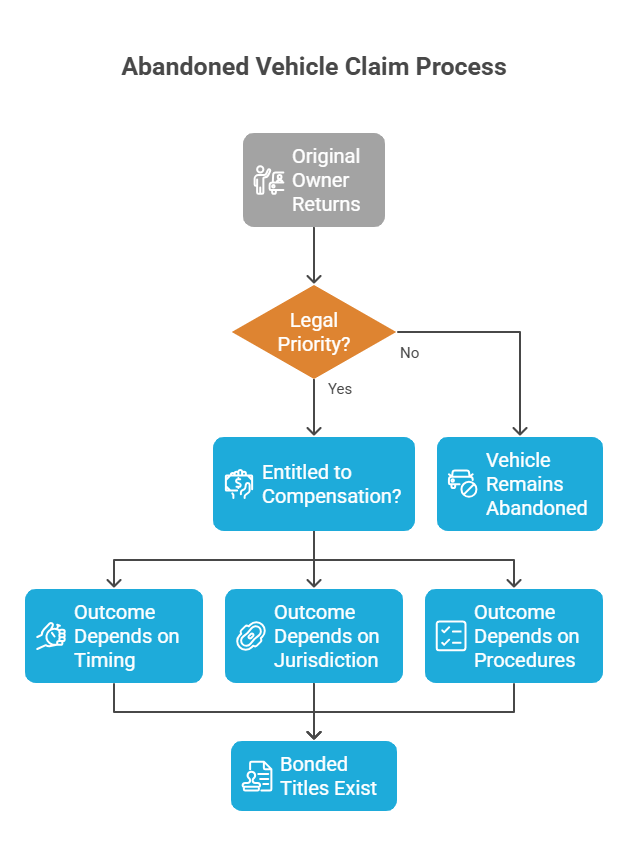
If the original owner returns to claim their vehicle after you’ve started the abandonment process, they typically have legal priority. However, you may be entitled to compensation. The outcome depends on timing, your state’s jurisdiction, and whether proper procedures were followed. This is one reason why bonded titles exist.
Understanding the difference between standard abandoned vehicle titles and bonded titles is crucial for anyone considering this process. While both give legal ownership, they have different requirements, costs, and limitations. The type of title you receive depends on your state’s jurisdiction and the specific circumstances of your case.
| Aspect | Abandoned Vehicle Title | Bonded Title |
| Process | Direct transfer after abandonment | Bond requirement for unclear ownership |
| Cost | Lower fees, no bond | Higher cost due to surety bond |
| Time Frame | Varies by state procedures | 3-5 years before a clear title |
| Restrictions | Fewer limitations on sale | Limited marketability initially |
| Owner Risk | Lower risk of future claims | Higher risk of ownership disputes |
When evaluating an abandoned vehicle, be especially cautious with vehicles showing signs of damage. A fire-damaged car or one with evidence of spotting flood damage may not be worth the effort required for an abandoned vehicle claim, as repair costs could exceed the vehicle’s value.
Similarly, a former rental car that appears abandoned might have complex ownership structures through leasing companies, making the process more difficult than typical private vehicle abandonment cases.
A Better Bid research indicates that bonded title vs abandoned title processes can take 6-18 months longer and cost $1,000-$3,000 more due to bond requirements.
Claiming an abandoned vehicle legally requires patience, proper documentation, and adherence to state-specific procedures. While the process can result in vehicle ownership at low cost, success rates are relatively low due to complex requirements. Always verify abandonment status, complete proper notifications, obtain necessary bonds, and work with responsible bodies throughout the process. Understanding your state’s car abandonment laws and following them precisely helps you avoid legal complications while claiming ownership.
Outstanding parking tickets typically become your responsibility. Check with local authorities about ticket status and determine the necessary steps.
Address the parking violations department to research outstanding tickets.
Factor ticket costs into your total investment calculation.
Consider negotiating payment plans if amounts are substantial.
Mechanics may have lien rights allowing them to claim vehicles for unpaid repairs. However, they must follow state-specific procedures, including proper notification and waiting periods before obtaining ownership.
Private property abandonment gives you more rights than public property situations, but you still must follow legal procedures. You need to report to the DMV first, rather than move the car yourself.
Contact local police to report the vehicle on your property.
Request an official abandonment determination from the DMV.
Follow your state’s property abandonment procedures.
Towed abandoned vehicles typically go through auction processes after designated storage periods. Towing companies must attempt owner notification before disposal and follow state regulations for unclaimed vehicle sales.
You can pass ownership once you legally obtain the title, but gifting before completing the proper process could implicate your friend in vehicle theft charges.
:format(webp)/vulcan.abetter.bid%2Fwp-content%2Fuploads%2F2024%2F03%2Fartem-beliaikin-vAh9TyyI7wM-unsplash.jpg)
:format(webp)/vulcan.abetter.bid%2Fwp-content%2Fuploads%2F2023%2F07%2Ftara-meinczinger-kVakWKgidgE-unsplash.jpg)
:format(webp)/vulcan.abetter.bid%2Fwp-content%2Fuploads%2F2022%2F10%2F2022-10-05-11.31.58-150x150.jpg)
:format(webp)/vulcan.abetter.bid%2Fwp-content%2Fuploads%2F2026%2F10%2Ffees1.jpg)
:format(webp)/vulcan.abetter.bid%2Fwp-content%2Fuploads%2F2026%2F10%2Flisting9.jpg)
:format(webp)/vulcan.abetter.bid%2Fwp-content%2Fuploads%2F2026%2F09%2Fcopart.jpg)

