


:format(webp)/vulcan.abetter.bid%2Fwp-content%2Fuploads%2F2026%2F02%2Fsalvage-vehicle.jpg)
 FAQ
FAQ 
Auto Auction Blog
March 27, 2024
How Much Is a Salvage Title Car Worth?
:format(webp)/vulcan.abetter.bid%2Fwp-content%2Fuploads%2F2022%2F10%2F2022-10-05-11.30.40-150x150.jpg)


Customer Service
9 am - 6 pm EDT
Monday - Friday
International
+1 (302) 613 - 1026Toll-Free
+1 (888) 277 - 3182To get a salvage title cleared in California, you must fully repair the vehicle, collect all parts receipts, pass a CHP salvage inspection, complete VIN verification and a Smog Check, and then submit the required forms and fees to the California DMV to receive a rebuilt title. Until these steps are completed, the vehicle cannot be legally registered or driven.
In California, a salvage title is a state brand added after major damage or an insurance write-off. Thus, the vehicle can’t be fully registered until it’s repaired and verified. For shoppers of revived salvage cars in California, it signals a lower price and higher responsibility:
California has several status labels for different types of vehicles, and each one controls what you can fix, register, and get coverage for. “Junk” is a dead end, while “revived” and “rebuilt” mean the vehicle passed checks and can be registered. Use this table to compare the four statuses before you get the vehicle or pay for parts.
| Status Type | Definition | Drivable? | Inspection Required | Registration Allowed | Insurance Impact |
| Salvage | Damaged and branded; intended for repair or parts. | Only after inspection | CHP (California Highway Patrol), smog, brake & lamp | After checks | Fewer options with an insurance company |
| Junk/Non-repairable | Designated for dismantling; not to be repaired. | No | None | No | Usually cannot insure |
| Revived Salvage | Repaired and verified for road use. | Yes, after inspection | CHP, smog, brake & lamp | Yes | Higher rates; limited coverage |
| Rebuilt | Verified and issued a rebuilt title in California. | Yes | CHP, smog, brake & lamp | Yes | Must disclose when selling |
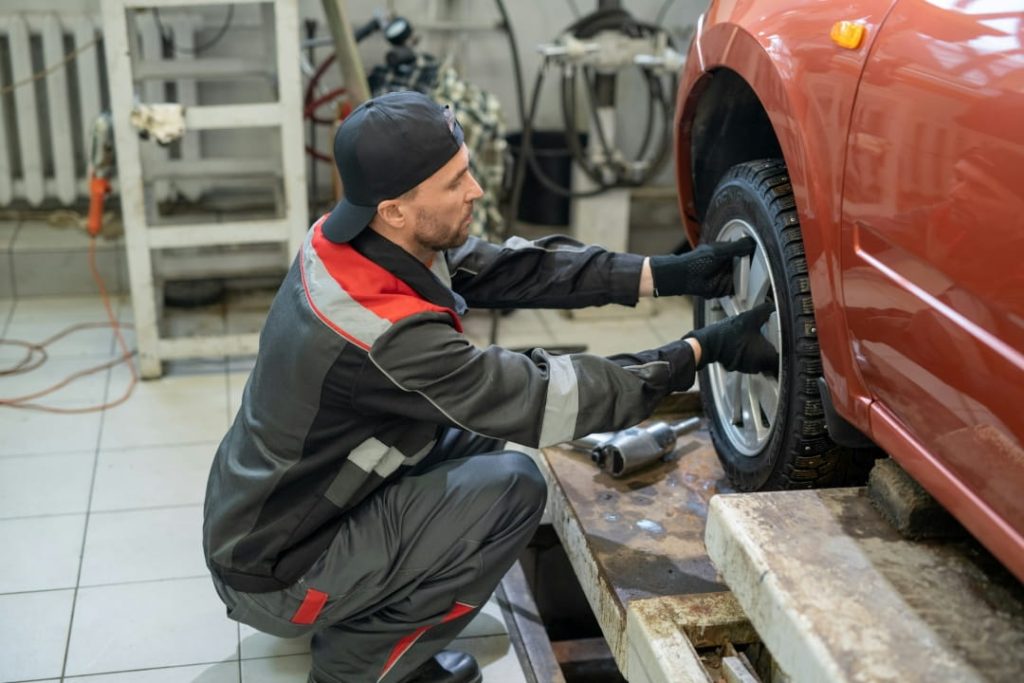
Rebuild only if safety systems can be restored. However, also verify whether the math works. If costs exceed the post-repair market value, the car is not worth fixing. Walk away if you see significant damage. Review the structure, missing airbags, or ownership gaps.
Automotive industry estimates commonly cite millions of U.S. vehicles being totaled each year.
Start with ACV (actual cash value), the pre-loss price you would pay for a comparable used car in similar condition. Then, estimate your true rebuild budget, not just parts. Include towing, storage, shop labor, and every exam fee. Use the salvage car value as a reference. Also, adjust for trim, mileage, and demand for a specific model. Finally, add a contingency for hidden issues. A revived salvage vehicle often has damage you won’t see until teardown.
A simple way is to price three possible outcomes. Consider the best, the most realistic, and the worst cases. If the worst case pushes you above ACV, pause. Renegotiate or walk away before you order expensive components.
| Line Item | How to Estimate | Why It Matters |
| ACV baseline | Comparable listings + pricing guides | Sets the ceiling you should invest in |
| Purchase total | Auction price + buyer fees + transport | Your “all-in” starting point |
| Parts & supplies | Quote everything; keep the receipt | Proves legality and quality |
| Labor | Shop quote or realistic DIY hours | Usually, the biggest variable |
| Compliance | Smog, Brake & Lamp, and the CHP appointment | Required to register |
| DMV finish | Taxes, fees, new plates, new title, and registration | Final step for legal road use |
Costs depend on the county and on what the department must issue. Nonetheless, plan for several separate charges. Typical out-of-pocket fees include identity checks, brake work, and taxes. If you miss a document, you add extra hassle. The timeline can stretch well beyond 10 days for any vehicle in California. Fee amounts also vary because the California DMV updates registration and title charges annually based on vehicle type, weight, and statewide surcharges.
Typical cost breakdown (California ranges):
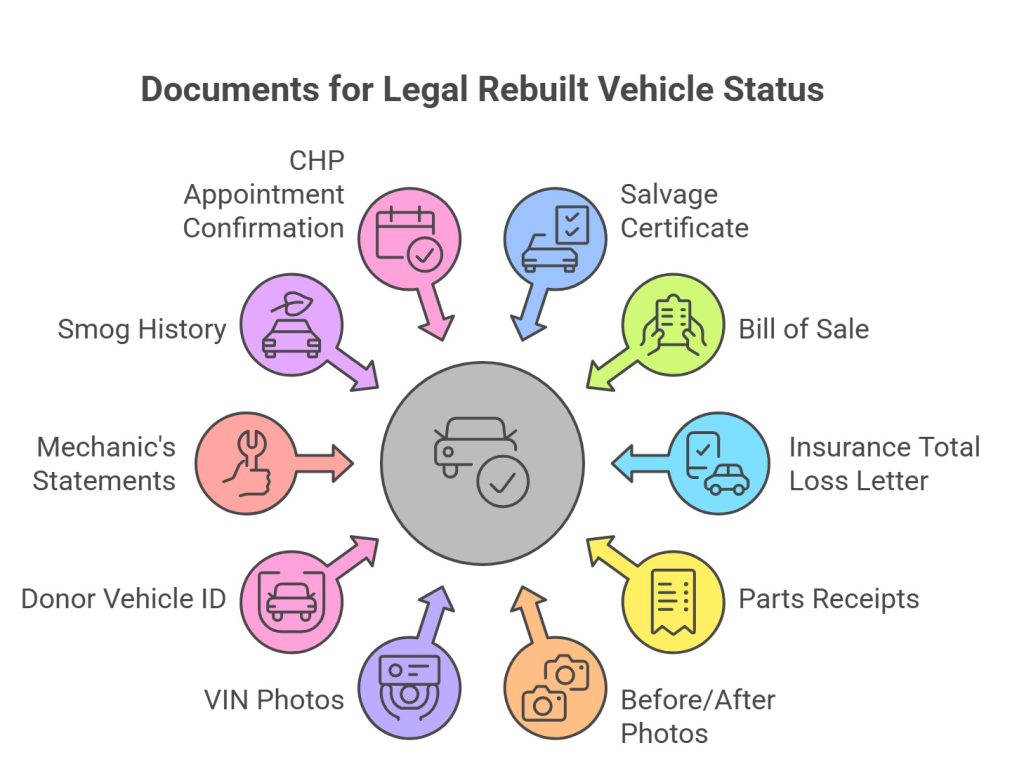
Paperwork is what turns a repaired vehicle into a legal rebuilt vehicle. The California Department of Motor Vehicles and the California Highway Patrol focus on identity and theft prevention, so documentation matters as much as wrench work. According to official guidance from the California DMV, every salvage or revived vehicle must have verifiable proof of ownership and parts origin before inspections can proceed. Make copies, keep originals clean, and organize by date. If you start repairs without proof for major components, the CHP inspection can fail.
Checklist with what each item proves:
California salvage title laws expect repairs that restore function, not cosmetic cover-ups. Aim for a roadworthy result. It should meet safety standards, with no warning lights and no structural shortcuts. Document the necessary repairs with photos. Also, keep your parts records organized. Plan to drive a salvage title vehicle after revival? Prioritize brakes, lights, tires, airbags, and alignment. Before inspection day, review the items below so the vehicle is ready for the street.
Core repair expectations:
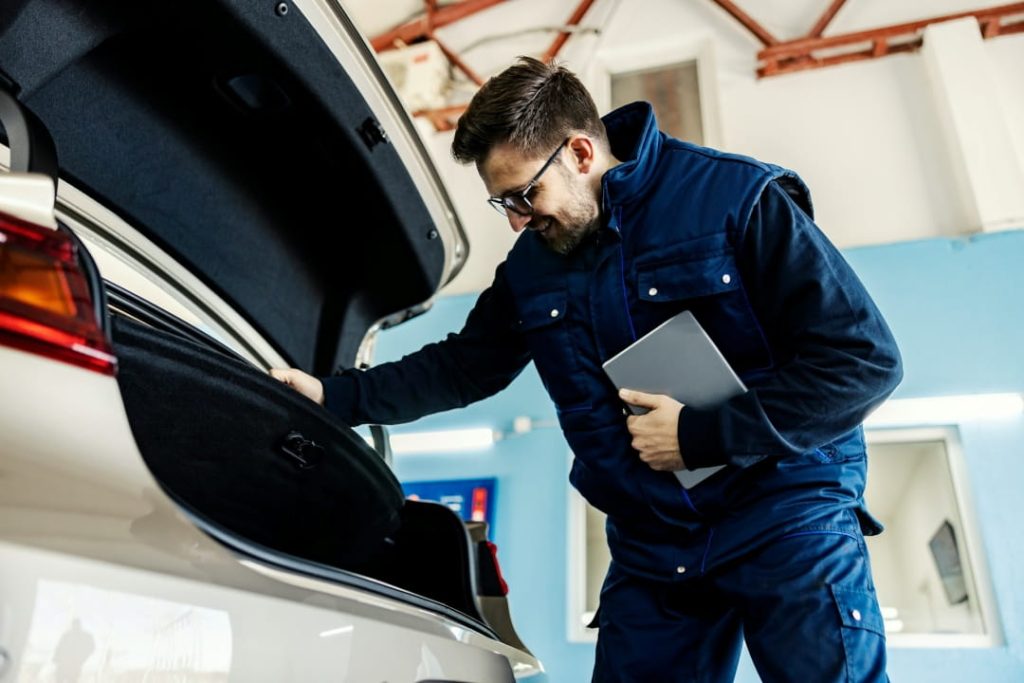
During the appointment, an officer verifies the vehicle identification number. They also check for tampering, review parts paperwork, and confirm that major components match your records. In addition to these core checks, the officer documents the condition of the vehicle as presented, records VIN locations throughout the chassis, and compares your ownership trail against California databases to ensure the car has no theft holds or conflicting title activity. They may also photograph specific areas of the vehicle for their internal file, confirm the accuracy of your salvage certificate, and verify that all receipts meet state documentation standards.
Most failures happen because paperwork doesn’t match what’s installed, or because identity items raise red flags. The officer’s job is to stop stolen parts from becoming “legal,” so they look closely at ID plates and donor records. They also confirm safety-related repairs are believable and complete. Use this list as a final pre-check before your appointment.
Top fail reasons:
Bring your stamped documents and driver’s license to the local DMV office. Request the revival transaction. Staff will review smog, brake, and light adjustment certificates, taxes, and identity forms. Then, they’ll issue your updated registration. Be ready to return to the DMV if some documents are missing.
Once you own salvage title vehicles, decide whether to rebuild, outsource, or exit. DIY can save money if you have tools, time, and discipline. A shop reduces mistakes but adds labor and scheduling. Selling avoids risk when the numbers go sideways, especially if major parts are hard to source. Compare the options below before you apply for final registration.
| Path | Who It Fits | Main Advantage | Main Drawback | Best Next Step |
| DIY rebuild | Skilled owners | Lower cash spend; control | Time; repeat appointment visits | Create a binder for the clerk |
| Professional rebuild | Busy owners | Faster diagnosis and repair | Higher repair costs | Get written estimates and photo updates |
| Sell as-is | Cost-sensitive owners | Ends the project quickly | Lower sale price | Disclose the salvage title clearly to rebuilders |
You can insure, register, and legally drive the vehicle. However, the title will always show the prior salvage history. A car with a rebuilt title may face limited coverage. Compare quotes and ask what documentation they want. For resale, keep the paper trail, photos, and proof.
Once the rebuilt title is issued, insurers often require proof of all major repairs before providing full coverage, and some will only offer liability plans. Rebuilt vehicles typically appraise 20-40% below clean-title cars, which affects resale and future insurance payouts. Lenders may also place restrictions on financing.
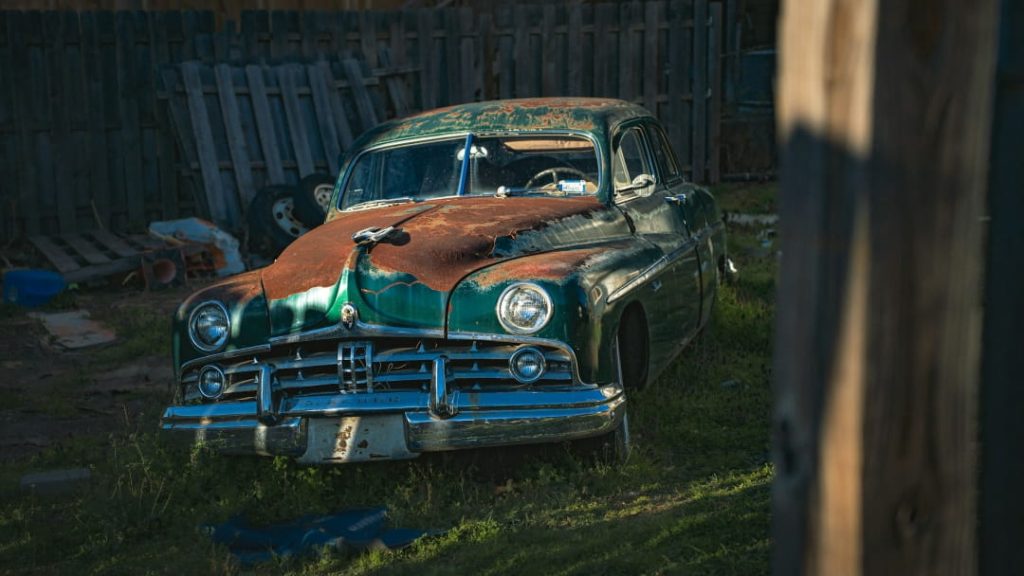
Fraud often shows up as hidden damage or ID swapping. Sellers may claim a clean title when the database is branded. Be extra careful when buying a salvage title vehicle from a private party. Never trust a single document. Use a VIN decoder, confirm the identification number in multiple spots, and verify the record in the state database. If you’re buying a rebuilt, insist on proof of the work performed and full disclosure.
Smart anti-fraud habits:
Yes. Ask the DMV for a permit so you can drive to a smog or scheduled inspection appointment. Keep it in the vehicle and follow the route and date limits.
Usually not. A revived salvage label doesn’t automatically change frequency. Smog cycles depend on county, year, and fuel type. Keep proof of the conducted work in case questions come up.
You may need a weight certificate when the vehicle class requires it, such as certain trucks or commercial setups. If you changed the configuration, ask the DMV counter during registration.
Yes, if parts fit correctly and are safe. Keep parts receipts for major components and note where they came from. The key is traceability and quality installation.
No single certificate is required, but keep invoices for modules, sensors, and belts, plus a scan showing no SRS faults. This helps show the vehicle with a rebuilt title is safe for daily use.
:format(webp)/vulcan.abetter.bid%2Fwp-content%2Fuploads%2F2024%2F03%2Fartem-beliaikin-vAh9TyyI7wM-unsplash.jpg)
:format(webp)/vulcan.abetter.bid%2Fwp-content%2Fuploads%2F2024%2F01%2Fmc-kontext-WKl8K3zOwmk-unsplash.jpg)
:format(webp)/vulcan.abetter.bid%2Fwp-content%2Fuploads%2F2024%2F02%2Fjakub-nawrot-3FYqzBCSLHQ-unsplash.jpg)
:format(webp)/vulcan.abetter.bid%2Fwp-content%2Fuploads%2F2026%2F10%2Ffees1.jpg)
:format(webp)/vulcan.abetter.bid%2Fwp-content%2Fuploads%2F2026%2F10%2Flisting9.jpg)
:format(webp)/vulcan.abetter.bid%2Fwp-content%2Fuploads%2F2026%2F09%2Fcopart.jpg)

